

Face Yoga: Will Facial Exercises Really Sculpt Your Face?
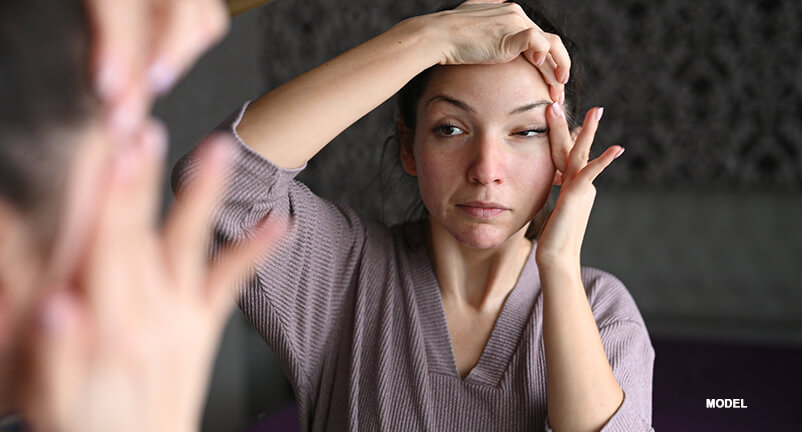
Face yoga has exploded in popularity across social media, with countless videos promising lifted cheeks, a snatched jawline, reduced wrinkles, and an instant glow, all without needles, devices, or in-office treatments. As interest in “natural” anti-aging options continues to grow, many patients are understandably curious whether face yoga actually works or if the results are being oversold online.
Below, we break down what face yoga is, what the science says, what results are realistic, and where it fits (and doesn’t fit) into an effective anti-aging routine.
What Is Face Yoga?
Face yoga is essentially a workout class for your face. Instead of squats and lunges, it involves numerous facial exercise movements that target the classic “aesthetic zones” of the face (cheeks, jaws, lips, forehead, etc.). Specific facial movements and holds are performed in an attempt to plump the cheeks, tighten the jawline, widen the eyes, and smooth the brow.
The idea is to treat the face like any other part of the body that can be “trained,” with the goal of improving tone, balance, and appearance over time. These routines are commonly marketed as ways to lift, sculpt, reduce wrinkles, and improve skin glow.
Face yoga differs from facial massage or lymphatic drainage. Those efforts focus on circulation and lymphatic flow, while face yoga emphasizes active muscle contraction and holds.
Does Face Yoga Work?
From a scientific perspective, the logic behind face yoga is not completely unfounded. Facial muscles do exist beneath the skin, and like other muscles in the body, they can respond to targeted activation. A small number of studies suggest that consistent facial exercise may lead to modest improvements in cheek fullness and perceived age.
One frequently cited pilot study published in JAMA Dermatology found that women who consistently followed a structured facial exercise program for about 20 weeks (performing facial exercises for 20-30 minutes daily) were rated as looking slightly younger and had slightly fuller cheeks. That said, these studies are small, and face yoga is far from being considered a gold-standard anti-aging treatment.
The bottom line is that face yoga is not snake oil, it really can provide SOME benefits. However, face yoga is also not the miracle sculpting fix social media promises. Its benefits lie somewhere in the middle.
What Benefits Does Face Yoga Really Provide?
For most people, the benefits of face yoga will be subtle and temporary. Face yoga benefits may include increased facial awareness, relaxation of chronically tense muscles (especially in the jaw, brow, and forehead), and a short-term boost in circulation.
Improved blood flow can create a mild plumping effect or healthy glow immediately after a session. For some patients, face yoga also serves as a structured self-care ritual that encourages relaxation and stress reduction, which can soften the appearance of tension-related expressions.
What About Facial Sculpting Benefits?
Any facial sculpting effect from face yoga is usually subtle, temporary, and related to muscle engagement or circulation rather than true structural change.
The term “facial sculpting” is often misunderstood. In medical terms, sculpting typically refers to changes in volume, fat distribution, bone structure, or skin tightness. These are all traits that facial exercises alone cannot meaningfully change.
Facial muscles do not build volume or shape in the same way larger body muscles do. While exercises may improve muscle tone beneath the skin, they cannot lift loose skin, restore lost collagen, or reposition fat pads that shift with age. The minor sculpting improvement face yoga does provide will vanish once the exercise is stopped.
Is Face Yoga For Jowls Effective?
Jowls develop due to a combination of skin laxity, fat descent, and age-related changes in the underlying bone structure. Unfortunately, facial exercises cannot tighten loose skin or reverse these deeper anatomical changes.
In some cases, face yoga may slightly improve the appearance of the lower face by improving muscle balance or reducing tension, but it will not truly lift jowls. Claims that exercises alone can significantly “lift” jowls are misleading and unfounded.
How Long Does It Take to See Results?
For those who are very consistent, some studies suggest that subtle changes may appear after several weeks to months of regular practice. However, it’s important to know that the results these studies reference tend be modest, such as slightly fuller cheeks or a more rested appearance, rather than dramatic transformation.
This contrasts with influencer timelines that often promise visible lifting or sculpting in days or weeks. Any benefits from face yoga are typically gradual and often temporary.
How to Do Face Yoga Safely
Face yoga is less about force and more about controlled, intentional movement. The goal is gentle muscle activation without excessive pulling or creasing of the skin.
A sample face yoga routine would include the following core principles:
- Start with clean hands and skin. Many people apply a light facial oil or serum to reduce friction.
- Use gentle pressure. Movements should feel controlled, not strained. Discomfort, jaw clenching, or pulling indicates too much force.
- Focus on muscle engagement rather than stretching the skin. Ideally, the skin remains relatively stable while the muscle underneath is activated.
- Maintain relaxed breathing and upright posture. Holding tension in the neck or shoulders can counteract potential benefits.
- Move slowly and intentionally. Face yoga is not meant to be rushed or aggressive.
- Practice in moderation. Most structured routines last about 20 to 30 minutes per session, several days per week.
Face yoga should never be painful. Soreness, jaw pain, headaches, or skin irritation are signs that the routine is too intense or too frequent.
Common Face Yoga Exercises
Rather than a single standardized routine, most face yoga programs use variations of similar movements that target specific areas of the face.
Forehead and Brow Exercises
These movements often involve stabilizing the brow with the fingers while gently lifting or resisting movement. The focus is on relaxing habitual tension rather than aggressively smoothing lines.
Cheek Activation Exercises
Cheek exercises usually involve controlled smiling or lifting motions, sometimes combined with light resistance from the fingers. Some routines include holding the lift for several seconds, while others use repeated, gentle movements to activate the midface muscles.
Jawline and Lower Face Exercises
Lower-face exercises often involve controlled opening and closing of the mouth, engaging the muscles around the lips and chin, or applying gentle resistance with the hands. The goal is muscle awareness and balance, not forceful tightening.
Neck Engagement Exercises
Neck-focused movements are typically slow and controlled, such as gently lifting the chin or placing light resistance under the jaw. These exercises aim to engage the neck muscles without straining the cervical spine.
Eye-Area Relaxation Exercises
Eye-area exercises are subtle and low intensity. They may involve controlled blinking, gentle resistance around the orbital area, or relaxing muscles associated with squinting. Because the skin here is delicate, these movements should always be minimal.
Most routines combine these exercises with light facial massage, stretching, and breathing, which is why face yoga often feels more like a wellness ritual than a workout.
How Often Should You Do Face Yoga?
Most structured programs recommend practicing for about 20 to 30 minutes at a time, several days per week. Daily practice is not always necessary, and more frequent sessions do not guarantee better results.
Can You Overdo Face Yoga?
Yes. Repetitive facial movements performed too frequently or with excessive force can strain muscles or contribute to unwanted creasing. Signs that someone should reduce frequency include soreness, jaw pain, headaches, or skin irritation.
Are There Any Negative Side Effects?
For most healthy individuals, gentle facial exercises are considered low risk. However, certain movements can be counterproductive. For example, exercises that repeatedly crease areas prone to expression lines (like the vertical lines between the brows) could theoretically deepen the very wrinkles someone is trying to soften.
Other issues such as jaw discomfort, TMJ irritation, headaches, or skin irritation can occur if exercises are done too aggressively or too often.
Can Face Yoga Replace Professional Treatments?
No, face yoga will never provide the type of results possible through professional in-office treatments. No matter how many facials exercises are preformed, they will never be able to address collagen loss, significant skin laxity, or volume loss.
Instead, face yoga may be best viewed as a complementary habit that supports relaxation and facial awareness rather than a substitute for evidence-based care.
When to Talk to a Professional
If you have ongoing concerns about sagging skin, jowls, sunken cheeks, or other visible aging changes, face yoga will not be able to provide the results you are after. Instead, consult with a skin care professional like a board certified dermatologist or plastic surgeon. Moderate to severe forms of facial aging may require surgical (i.e. facelift or neck lift) or non-surgical (i.e. laser skin resurfacing or skin tightening) treatment methods to address underlying causes. These professionals will be able to assess what is happening beneath the skin and recommend personalized options based on your anatomy, goals, and skin health.
Bottom Line: Is Face Yoga Worth Trying?
Face yoga may offer mild benefits for patients who are consistent, patient, and realistic about expectations. Face yoga will never dramatically sculpt or lift the face. When done consistently and correctly, however, face yoga can be a low-risk addition to a broader skin health routine.

Helyn Alvarez, MD, FAAD is a board-certified Dermatologist. Dr. Alvarez completed her undergraduate studies at Boston University in Boston, Massachusetts. She earned her medical degree and internship training from Loyola Stritch School of Medicine in Chicago, Illinois, and went on to complete her dermatology residency at the University of Alabama-Birmingham. Passionate about delivering natural-looking results, she is highly trained and experienced in aesthetic dermatology, specializing in advanced cosmetic procedures. Dr. Alvarez excels in injectables, fillers, neuromodulators like Botox, state-of-the-art laser treatments, skin tightening procedures, and non-invasive facial rejuvenation.
Disclaimer: The contents of the Westlake Dermatology website, including text, graphics, and images, are for informational purposes only and are not intended to substitute for direct medical advice from your physician or other qualified professional.