

Treating Xanthelasma of the Eyelids With Bleomycin Injections
Xanthelasma are yellowish, raised cholesterol deposits that typically appear on or around the eyelids. While they are not harmful to one’s health, many patients find them cosmetically bothersome, especially since they often grow and become more noticeable over time. Contrary to popular belief, xanthelasma of the eyelids is not necessarily caused by underlying cholesterol abnormalities.
One way to address xanthelasma is through surgical removal. However, many patients prefer to avoid surgery as they have concerns regarding anesthesia, scarring, or a downtime. Fortunately, there is an effective non-surgical alternative that some dermatologists prefer for select patients: bleomycin injections.
What Is Bleomycin?
Bleomycin is a prescription medication that has been used safely in medicine for decades. It is derived from a naturally occurring compound that was later refined for medical use.
Although bleomycin is best known for its role in cancer treatment at very high doses, dermatologists use it in extremely small, localized amounts to target specific skin lesions. When administered in this fashion, the medication remains confined to the treatment area and does not circulate throughout the body.
How Can Bleomycin Be Used to Treat Xanthelasma?
Bleomycin works by disrupting the abnormal, lipid-rich cells that form xanthelasma deposits.
Over the course of several weeks to months, the treated areas gradually flatten and lighten as the body reabsorbs the affected tissue. When performed properly, this process produces minimal impact on the surrounding eyelid skin.
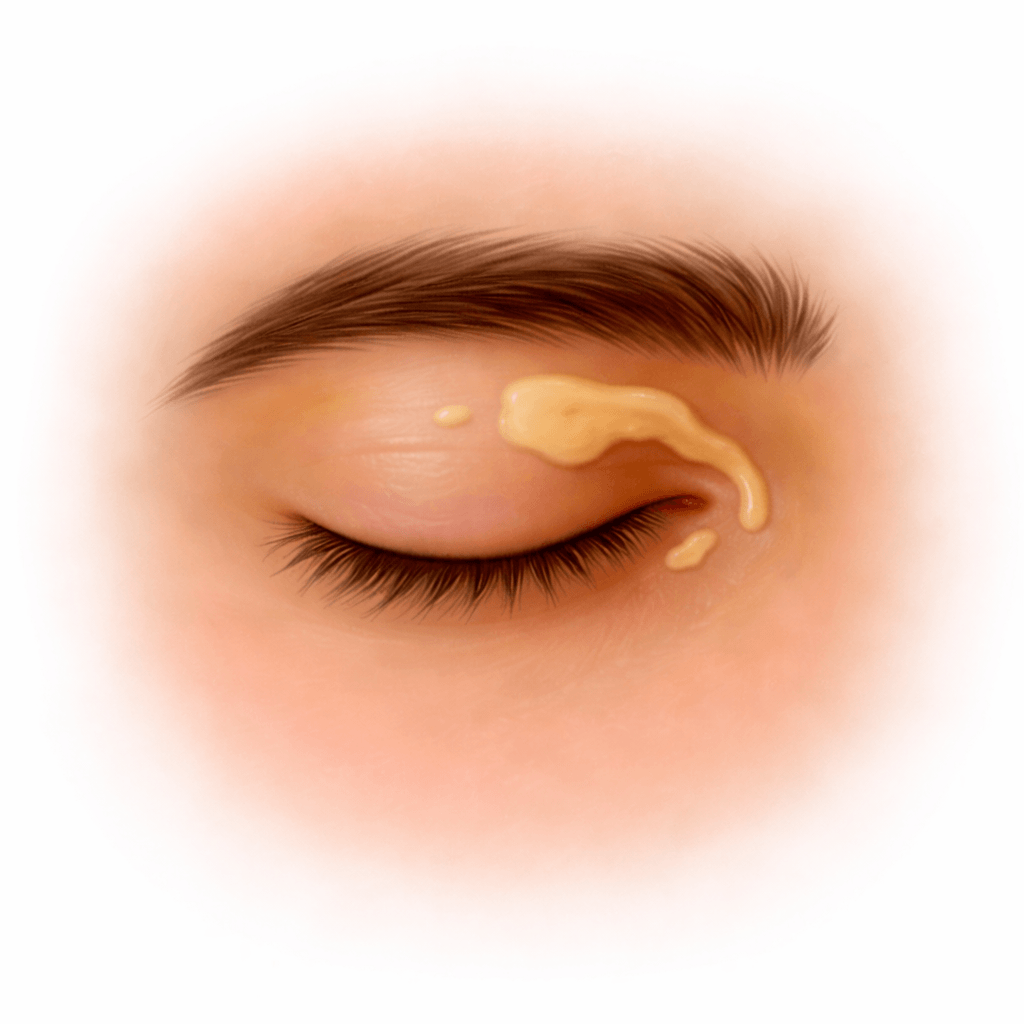
Illustration showing moderate to severe Xanthelasma deposits along the upper eyelid
Benefits of Bleomycin Treatment vs Surgical Removal
Compared to surgery, bleomycin injections offer several advantages:
- Minimal discomfort
- No general anesthesia required
- Minimal risk of scarring
- A much shorter recovery time
- Precision treatment of delicate skin
How Are Bleomycin Injection Procedures Performed?
Bleomycin treatments are performed in office by an experienced injector.
The procedure begins with cleansing of the treatment area. A topical numbing cream may be applied pre-injection to minimize discomfort. Using a very fine needle, the provider injects small amounts of bleomycin directly into the xanthelasma deposits.
The procedure itself is relatively quick, often taking no more than 10 to 15 minutes, depending on the number and size of lesions being treated. No operating room or hospital setting is required.
How Effective Is the Treatment? Are Results Permanent?
Most patients experience significant improvement in xanthelasma appearance after a single session of bleomycin. Multiple sessions performed over a period of several months may be needed to achieve optimal cosmetic results.
Once successfully treated, the specific lesions addressed generally do not return. However, new xanthelasma can develop over time.
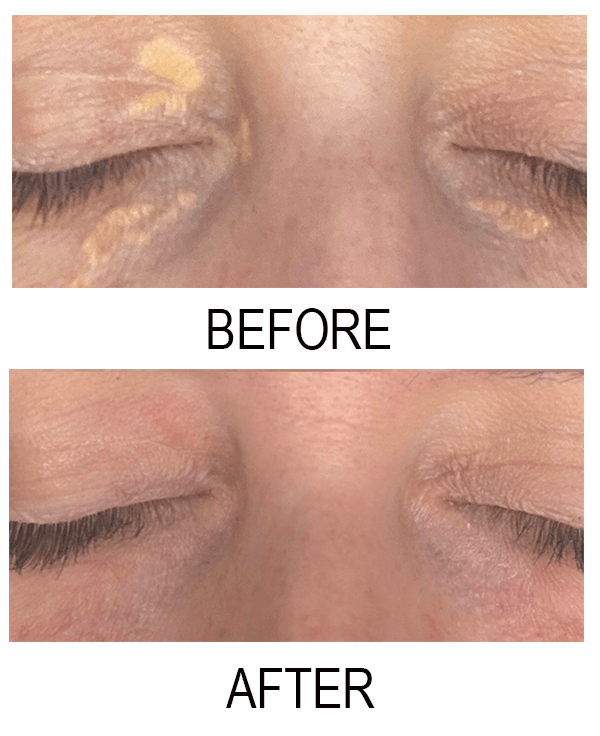
See More Results: To view more before and after Bleomycin injection photos, please view our photo gallery
Who Is a Good Candidate for Bleomycin Treatment?
Bleomycin injections may be appropriate for patients who:
- Have small to moderate xanthelasma lesions
- Prefer a non-surgical approach
- Want to minimize scarring risk
- Are not ideal surgical candidates
A consultation with a dermatologist is essential to determine whether bleomycin is the best treatment option based on lesion size, location, skin type, and overall health.
Is the Treatment Painful?
Most patients tolerate bleomycin injections extremely well. The brief mild discomfort is typically described as a small pinch or sting. A topical numbing agent may be used to further improve comfort during the procedure.
Is Downtime Required?
While downtime (recovery time) is significantly less than surgery, bleomycin treatment does require downtime. Most patients will experience swelling, redness, or tenderness at the injection sites for several days to several weeks. These effects typically resolve on their own, and most patients are able to resume normal activities almost immediately after treatment.
Are There Any Side Effects?
Side effects are usually mild and localized and may include temporary redness, swelling, bruising, or slight skin irritation at the treatment site. When administered in small, controlled doses by an experienced injector, serious side effects are rare.
Your provider will review potential risks and aftercare instructions during your consultation.
Can Bleomycin Treatment for Xanthelasma Be Covered by Medical Insurance?
In most cases, the treatment of xanthelasma is considered cosmetic and is not covered by medical insurance. However, if a lesion interferes with vision, treatment may be deemed medically necessary and some insurance providers may cover the cost of treatment.
Our team can help review your options, discuss expected costs, and answer any insurance-related questions during your visit.

Daniel P. Friedmann, M.D. is a fellowship-trained, board-certified dermatologist and phlebologist at Westlake Dermatology and Clinical Research Director of the Westlake Clinical Research Center. He has presented nationally on photorejuvenation, noninvasive fat reduction, radiofrequency devices, up-to-date techniques in photodynamic therapy, the management of stretch marks, and the treatment of hand, chest, and facial veins.
Disclaimer: The contents of the Westlake Dermatology website, including text, graphics, and images, are for informational purposes only and are not intended to substitute for direct medical advice from your physician or other qualified professional.