

Volufiline for Volume: Can It Replace Fillers?
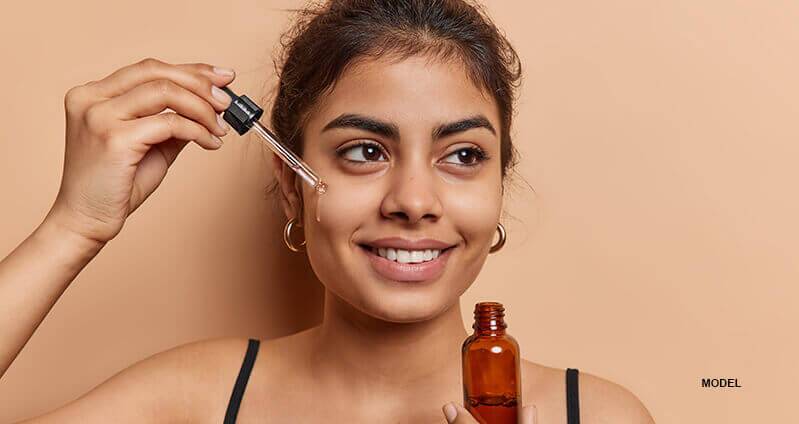
Volufiline is one of the latest cosmetic skincare ingredients catching fire on social media. Marketed as a “non-invasive filler alternative,” it is often promoted as a way to increase facial volume, plump hollow areas, and enhance features such as the lips, cheeks, or under-eye region.
Is it all too good to be true? Can a topical product truly mimic the effects of injectable dermal fillers?
Here’s what Volufiline is, how it claims to work, what the current science suggests, and how it’s results really compare to in-office treatments.
What Is Volufiline?
Volufiline is a patented cosmetic ingredient derived from a plant extract (Anemarrhena asphodeloides). It is most commonly found in serums, creams, and targeted treatments marketed for localized volume enhancement.
Unlike hyaluronic acid, which temporarily plumps the skin by pulling hydration into the cells, Volufiline is promoted as an ingredient that increases lipid storage within adipocytes (fat cells). It is pitched as way to promote fat storage in localized (targeted) areas that experience volume loss.
It is important for people to know that Volufiline is considered a cosmetic ingredient, not a medical treatment. It has not been approved by the FDA for volume enhancement or skin plumping.
What Benefits Does Volufiline Claim to Provide?
Products containing Volufiline often claim to:
- Increase facial volume
- Plump hollow or sunken areas
- Enhance lip fullness
- Improve under-eye hollowness
- Restore youthful softness
- Reduce the appearance of fine lines by adding volume
Some brands suggest visible results within weeks of consistent use, which has contributed to its rapid rise in popularity among patients seeking alternatives to injectables.
@devonkelley_ I’m back on volufiline! Get on the waitlist for @The Ordinary Volufiline 92% + Pal-Isoluceine 1% at the link in my bio ♥️ #theordinarypartner ♬ original sound – Devon Kelley
Does Volufiline Work?
Volufiline contains sarsasapogenin, a steroidal sapogenin derived from plant sources. According to manufacturer-supported research, the compound may stimulate adipocyte differentiation and lipid accumulation in fat cells.
In theory, this could slightly increase the size of fat cells in the area where it is applied, leading to localized fullness.
However, there are several things to consider:
- Topical ingredients must penetrate the skin barrier to reach deeper, subcutaneous fat layers
- The skin barrier is specifically designed to prevent such penetration by foreign substances
- Most cosmetic products primarily act within the epidermis and superficial dermis
The question is not whether adipocyte stimulation is possible in a laboratory setting, but whether it’s possible for meaningful fat cell enlargement to occur in living human skin through topical application.
What Does the Scientific Evidence Say?
Currently available research regarding the effectiveness of Volufiline is limited, and modest at best.
Most studies (like this one) referenced by brands are small and often funded or conducted by the ingredient manufacturer. Some report modest increases in localized volume or skin plumpness after several weeks of use.
However:
- Independent large-scale clinical trials are lacking
- Long-term safety and sustained volume effects are not well studied, and data is limited
- Objective measurement methods vary
Even in favorable studies, the reported improvements tend to be modest rather than dramatic.
This suggests that while Volufiline may contribute to subtle plumping effects, it is unlikely to produce significant structural volume changes.
How Noticeable Are the Results?
With consistent use, individuals have reported:
- Mild improvement in skin smoothness
- Slight surface level plumping effect in targeted areas
- Temporary, subtle softening of fine lines
Realized improvements often occur gradually and are subtle at their peak, and require ongoing use to maintain effect. Results may diminish if application is discontinued.
It is important to set expectations appropriately. Volufiline does not reshape facial contours, replace lost fat pads, or restore significant age-related volume loss.
Volufiline vs. Dermal Fillers: A Realistic Comparison
Volufiline is often marketed as a topical alternative to injectable fillers. However, the two are fundamentally different in mechanism and magnitude of effect.
Dermal Fillers
- Are FDA approved for volume enhancement and restoration
- Physically add volume immediately
- Can lift, contour, and reshape facial features
- Produce predictable and measurable results
- Last 6 to 24 months depending on product and area
Fillers are placed precisely into specific tissue planes by trained professionals, allowing for dramatic structural correction of volume loss.
Volufiline
- Is applied topically
- Relies on potential stimulation of fat cell lipid storage
- Produces subtle, gradual effects
- Requires ongoing use to maintain results
In my clinical experience, Volufiline may slightly enhance surface fullness or hydration appearance, but it cannot replicate the lifting capacity, contour precision, or longevity of injectable fillers.
Who Might Benefit from Volufiline?
Volufiline may be appropriate for individuals who:
- Prefer non-invasive skincare options
- Have early or very mild volume concerns
- Want to experiment with subtle enhancement
- Are not ready for injectable treatments
It may also function as a supportive addition within a broader skincare regimen focused on hydration and skin quality.
However, patients seeking noticeable cheek enhancement, lip augmentation, or correction of deep under-eye hollowness are unlikely to achieve those results with topical products alone.
Safety Considerations
Volufiline is generally well tolerated when used as directed, though patients should:
- Patch test prior to use, and discontinue if redness or irritation develops
- Avoid application directly into the eyes
- Use caution on irritated or compromised skin
As with many cosmetic ingredients, safety data in pregnancy and breastfeeding is limited, so avoidance is typically recommended out of caution.
The Bottom Line
Volufiline is an interesting, emerging cosmetic ingredient with emerging data suggesting it may support subtle, surface-level plumping effects when used consistently.
For those seeking modest, non-invasive enhancement, Volufiline may provide incremental improvement in skin appearance. However, current evidence indicates that results are typically mild and temporary. It does not replace the structural, long-lasting volume provided by dermal fillers.
For patients with significant volume loss or contour concerns, in-office treatments remain the most effective option.

Alyssa Rodriguez, PA-C, is a certified Physician Assistant specializing in both medical and cosmetic dermatology. She completed her undergraduate degree at Southern Methodist University before beginning her career with Westlake Dermatology as a medical assistant. During her two years in that role, she gained extensive hands-on experience in dermatologic care and developed a strong foundation in both clinical and aesthetic treatments. Alyssa offers cosmetic services including injectables, chemical peels, and laser treatments, in addition to treating common dermatologic concerns such as acne, eczema, and psoriasis.
Disclaimer: The contents of the Westlake Dermatology website, including text, graphics, and images, are for informational purposes only and are not intended to substitute for direct medical advice from your physician or other qualified professional.