
Professional Light Therapy vs. LED Masks: Why Go Pro
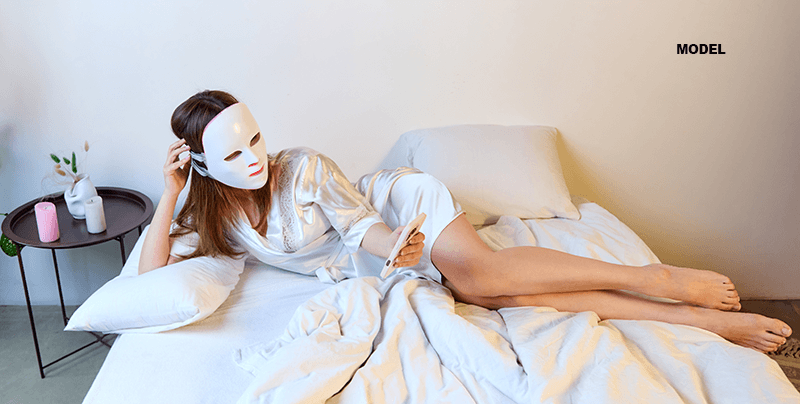
Light therapy has become one of the most popular non-invasive skin treatments in recent years. From dermatology offices to social media influencers wearing glowing face masks at home, interest in light-based treatments for skin health and rejuvenation continues to grow. This has fueled rapid growth in the at-home skincare device market, with numerous LED masks now widely available and aggressively marketed to consumers.
Through all the promotion, one important question remains: Are at-home LED masks equivalent to professional light therapy treatments?
While both use similar wavelengths of light, professional treatments provide greater power, deeper skin penetration, more customization, and offer far greater safety oversight compared to at-home LED masks. Here’s why we think you should go pro!
| Feature | Professional Light Therapy | At-Home LED Masks |
|---|---|---|
| Higher therapeutic energy | ✓ Yes | ✕ No |
| Deeper stimulation | ✓ Yes | Limited |
| Customizable settings | ✓ Yes | Usually no |
| Professional oversight | ✓ Yes | ✕ No |
| Eye protection and safety monitoring | ✓ Yes | Limited |
| Faster visible results | ✓ Yes | Usually no |
| Best for more significant concerns | ✓ Yes | ✕ No |
| Good for maintenance | ✓ Yes | ✓ Yes |
| Lower upfront cost | ✕ No | ✓ Yes |
| Convenient home use | ✕ No | ✓ Yes |
How Light Therapy Works
To understand the difference between professional and at-home devices, it helps to first understand how light therapy works. LED light therapy relies on specific wavelengths of light to stimulate biological activity within the skin. Different wavelengths penetrate to different depths and trigger different cellular responses.
- Red light (630–660 nm): Works to stimulate fibroblasts and supports collagen production.
- Blue light (405–470 nm): Targets acne-causing bacteria in the epidermis.
- Near-infrared (800–850+ nm): Penetrates deeper layers to reduce inflammation and support healing.
Wavelength determines how deep light can travel, but energy output determines how strong the biological effect will be. This distinction is critical when comparing professional vs. at-home options.
Power and Energy Output
The most important difference between professional light therapy and at-home LED masks is strength (power and energy output). Even if two different devices offer similar wavelengths, they will not necessarily deliver the same level of therapeutic energy. Often, the effectiveness of any light therapy treatment depends heavily on how much power is delivered to the skin.
Two key concepts help explain this:
- Irradiance (mW/cm²): The power delivered per square centimeter of the skin.
- Energy density (J/cm²): The total energy delivered over the entire treatment session.
Higher therapeutic thresholds generally produce stronger and more measurable cellular responses, resulting in more noticeable and long-term benefits.
Professional Light Therapy
Professional systems are designed to emit higher levels of energy. Most systems fall within the following ranges:
- Typical irradiance range: 40–150+ mW/cm²
- Typical energy per session: 20–60+ J/cm²
- Medical-grade calibration
- Designed to produce faster and more predictable biological responses
At-Home LED Masks
In contract, consumer devices (LED masks) are intentionally designed with lower power to ensure they are safe for use at home. Most LED masks fall within the following ranges:
- Typical irradiance range: 5–30 mW/cm²
- Often deliver under 10–20 J/cm² per session
- Require frequent, long-term use
- Results tend to be gradual and subtle
Key Takeaway
Professional light therapy is more powerful: Professional systems often deliver 2–5 times more power density than at-home masks.
While both options may emit similar “colors” of light, the strength, and therefore the clinical impact, is significantly different. Professional light therapy systems yield faster and more predictable biological responses while lower powered LED masks offer subtle and gradual results with long-term usage.
Depth of Penetration
The depth of penetration, or how far the light energy can reach into lower levels of the skin, is also a key factor in how beneficial light therapy is. Depth is primarily determined by wavelength, but the strength of stimulation at that depth depends on how much energy is delivered.
Red Light (630–660 nm)
Red light penetrates approximately 1–3 millimeters into the skin, reaching the dermis where collagen-producing fibroblasts are located.
- Professional systems deliver higher energy at that depth, stimulating collagen more robustly.
- At-home masks may reach similar depths, but lower energy limits the degree of collagen stimulation.
Blue Light (405–470 nm)
Blue light penetrates less than 1 millimeter and primarily affects the epidermis.
- Targets acne-causing bacteria.
- Both professional and at-home devices can help mild acne.
- Professional treatments are far more effective for moderate to severe acne as it may provide stronger antibacterial impact in fewer sessions.
Near-Infrared (800–850+ nm)
Near-infrared light can penetrate 3–5 millimeters, reaching deeper dermal and subdermal layers.
- Supports healing and inflammation reduction.
- Professional systems more reliably deliver therapeutic near-infrared intensity.
- At-home masks typically do not include near-infrared or includes it at lower intensities.
Key Takeaway
Professional light therapy provides more light energy at deeper layers of the skin. Both types of devices may emit similar wavelengths. However, professional systems deliver more meaningful stimulation at depth, resulting in stronger collagen remodeling and inflammation reduction.
Customization and Treatment Planning
Another important distinction is treatment customization. Light therapy is most effective when it is tailored to a patient’s specific skin type and concerns. Professional (in-office) light therapy treatments allow for precise setting calibration, providing a higher degree of treatment personalization that at-home devices simply cannot provide.
Professional Treatments
- Adjustable intensity
- Ability to combine multiple wavelengths
- Integrated into acne or anti-aging treatment plans
- Skin-type assessment and pigment risk evaluation
At-Home Devices
- One-size-fits-all settings
- No professional oversight
- No adjustments based on skin response
Key Takeaway
Treatment customization increases both safety and effectiveness. Professional light therapy can be tailored to each individual patient while LED masks offer one-size-fits-most treatments.
Safety and Oversight
Although both types of light therapy are generally considered safe, the professional supervision proved with in-office light therapy adds an additional layer of protection.
Professional Light Therapy
- Performed under medical supervision
- Utilizes eye protection
- Skin is professionally assessed and treatment settings tailored to patient need
- Monitoring for pigment or inflammatory reactions
- Adjustments can made based on patient response
At-Home LED Masks
- Self-directed use (with minimal instruction)
- Risk of overuse or improper timing between sessions
- Variable regulatory standards (make sure to choose reputable device)
- No professional monitoring
Key Takeaway
Professional light therapy offers a safer and more controlled treatment experience. Since treatments are performed under trained supervision, providers can evaluate the skin, use proper eye protection, customize settings, and monitor for irritation, pigment changes, or inflammatory reactions. At-home masks are generally lower-powered, but they are also self-directed, which can increase the risk of overuse, inconsistent use, or missed warning signs.
Results Timeline and Expectations
Understanding expected outcomes is important when choosing between options. Since professional systems deliver higher energy levels, results are both more dramatic and manifest more quickly.
Professional Treatments
- Faster, more visible improvement
- Structured treatment schedule
- Objective progress tracking
- More predictable results
At-Home Devices
- Gradual improvements
- Requires consistent long-term use
- Results tend to be subtle
Key Takeaway:
Professional light therapy is safer as treatments are administered in a controlled environment with trained providers monitoring response.
Cost
Cost is often a deciding factor for patients choosing between professional or at-home light therapy. Here’s how they compare:
Professional Therapy
- Higher upfront investment
- May require fewer sessions
- Potentially reduces spending on ineffective devices
At-Home Masks
- Lower initial cost
- May require prolonged use
- May not deliver sufficient results for more significant concerns
Key Takeaway:
While at-home devices typically require a lower upfront investment, they may deliver more subtle results and require consistent, long-term use. Professional treatments involve a higher per-session cost, but they are more powerful, often require fewer sessions, and may ultimately provide greater value for patients seeking meaningful improvement.
Who Is a Good Candidate for Each?
Not every patient requires professional treatment, and not every concern can be effectively managed with an at-home device. The appropriate choice depends on the severity of concerns and desired outcomes.
Professional Light Therapy May Be Best For:
- Moderate to severe acne
- Skin laxity, sagging or collagen loss
- Post-procedure healing
- Patients seeking faster, more noticeable results
At-Home LED Masks May Be Appropriate For:
- Maintenance between treatments
- Mild concerns
- Gradual improvement
- Supplementing professional care
Key Takeaway:
At-home LED masks can provide gradual, subtle improvements, particularly for mild concerns or as part of a consistent maintenance routine. For some patients, they can be a convenient way to support overall skin health between professional visits.
However, they are not equivalent to medical-grade systems. Differences in power, depth of penetration, customization, and clinical oversight can significantly impact the level and predictability of results.
Professional light therapy offers:
- Higher therapeutic energy
- Deeper, more targeted stimulation
- Treatment customization
- Medical supervision for safer and more optimal outcomes
If you are considering light therapy, a consultation with a qualified provider can help determine whether professional treatment, at-home maintenance, or a combination of both is best suited to your skin type and goals. When meaningful, efficient, and predictable results are the priority, professional precision makes a measurable difference.

Dr. Stephanie Saxton-Daniels is a Board-Certified Dermatologist and a Fellow of the American Academy of Dermatology. Dr. Saxton-Daniels completed a General Surgery internship at the University of New Mexico prior to graduating from the nationally recognized Dermatology residency program at UT Southwestern in Dallas, Texas. The scope of her practice encompasses medical, surgical, pediatric & cosmetic dermatology. She enjoys treating families and has a special interest in skin cancer, acne, eczema, allergic contact dermatitis and alopecia.
Disclaimer: The contents of the Westlake Dermatology website, including text, graphics, and images, are for informational purposes only and are not intended to substitute for direct medical advice from your physician or other qualified professional.