
Breast Augmentation Recovery: Timeline, Tips & What To Expect

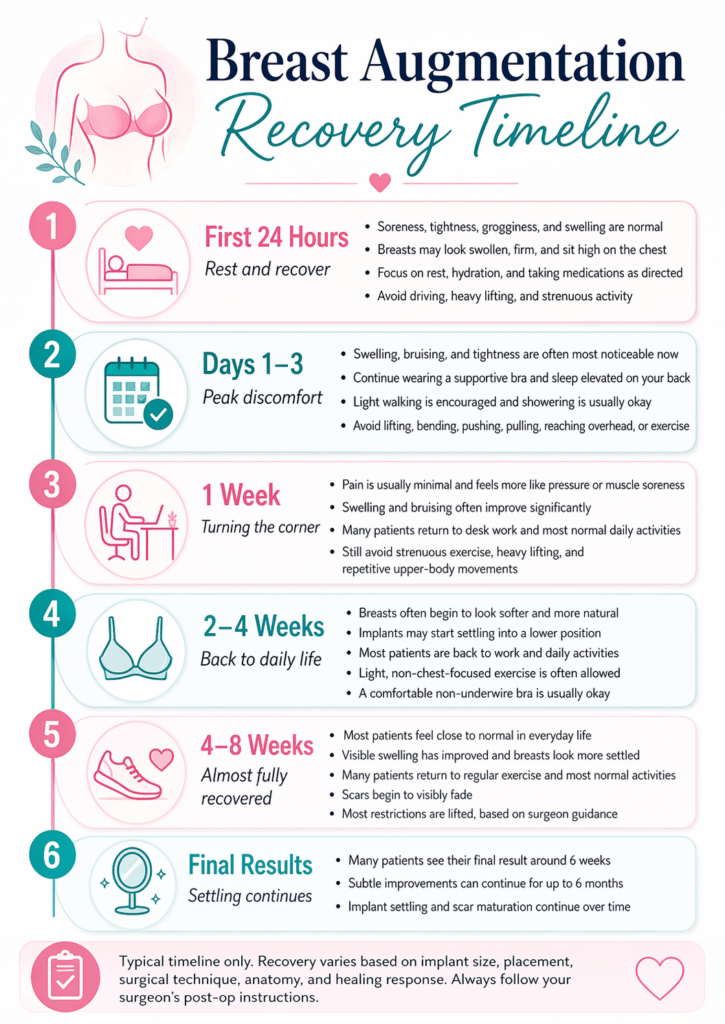
The typical breast augmentation recovery timeline spans about 6 to 8 weeks, with final results continuing to refine over several months:
- Within 1 week: Most patients can return to work, especially if their job is not physically demanding.
- Within 1 to 2 weeks: Patients can typically resume most normal daily activities as discomfort, tightness, and swelling begin to improve.
- Within 1 to 2 months: Many patients can return to more vigorous exercise once cleared by their surgeon.
- Up to 6 months: Implants continue to settle, swelling improves, scars mature, and final results become more visible.
In this blog post, we’ll provide a complete guide to breast augmentation recovery including a typical timeline, procedure factors that influence recovery time, tips for a smooth recovery, and answers to frequently asked questions.
Typical Breast Augmentation Recovery Timeline
Please Note: It is important to remember that this is only a typical breast augmentation recovery timeline. Patients who receive a regional nerve block at the time of their augmentation have a significantly quicker recovery. Every patient heals differently, and your experience may vary based on factors such as implant size, implant placement, surgical technique, your unique anatomy, and your body’s natural healing response. The following represents the typical breast augmentation recovery timeline as reported to us by our patients. Please note that patients that receive a regional nerve block with their augmentation procedure report significantly less pain, less discomfort, less nausea and less hang over from the anesthesia.
First 24 Hours Following Surgery
How You’ll Feel
Most patients will experience some degree of pain and discomfort, which can be managed by prescribed pain mediation and a muscle relaxer. Patients with nerve blocks typically have minimal pain and only require a NSAID’s (ibuprofen, naproxen). It is normal to feel groggy, sore, tired, and tight through the chest as anesthesia wears off, again all these effects are attenuated with a nerve block. Some patients also experience pressure, mild nausea, or temporary changes in breast or nipple sensations (either oversensitivity or a loss of sensitivity).
How You’ll Look
Before leaving the surgery center or hospital, the surgeon will wrap the patient’s breasts with a bra or elastic band, which helps with support during recovery. Immediately following surgery, your breasts will likely look swollen, firm, and somewhat high on the chest. Bruising may also begin to appear over the first week. Depending on the incision site, you will typically have tape(steri-strips) or dressing covering the incision. During the first 24-72 hours there will be some swelling that develops and the breasts will appear larger and higher that they will ultimately be when the swelling resolves. There may also be some asymmetry in the swelling that will resolve with the swelling.
Things You Can Do
Your main focus should be resting, staying hydrated, and taking medications exactly as directed. Ice packs (cold compress) can be utilized to help control swelling.
Things You Can’t Do
You should not drive while taking narcotics or muscle relaxants. Also limit making posts on the internet or online purchases until the effects of anesthetics, narcotics and muscle relaxants have worn off. You should refrain from lifting anything heavy, raising your arms excessively high, or do anything that would be considered strenuous. It is also important to avoid any activity that involves a lot of impact or bouncing. Patients are advised to have a trusted caregiver on hand to help handle any household duties, pets, and/or childcare.
1 to 3 Days Following Surgery
How You’ll Feel
This is often the most uncomfortable part of the recovery process as soreness, tightness, and swelling peak. Tightness, soreness, pressure, fatigue, and limited upper body mobility are all common, especially if the implants were placed under the muscle. Nerve blocks patients will experience some mild discomfort on day 2-3 as the block wears off but typically do not require pain medication.
How You’ll Look
Swelling and bruising are often most noticeable during the first few days after surgery. The breasts may appear overly full, sit high, and look less natural than expected, but this is a normal part of early healing.
Thinks You Can Do
Continue resting, wearing your supportive bra, and sleeping on your back with your upper body elevated (. During this period light walking is highly recommended as gentle movement can help improve circulation (and thus healing) and minimize any chances of blood clots. Patients will also be cleared to shower.
Things You Can’t Do
Patients should still avoid lifting their arms overhead and any other strenuous movements. Avoid lifting, bending repeatedly, pushing, pulling, reaching overhead, or exercising. Even routine movements that strain the chest (i.e. pushing a door open) should be minimized during this stage.
1 Week Following Surgery
How You’ll Feel
Towards the end of week 1 most patients say pain and discomfort is minimal. Many describe the sensation more as pressure or muscle soreness than sharp pain. Swelling and bruising should have diminished significantly, and patients may feel more comfortable with movement and daily activities. Patients may experience itching or sensitivity around their incisions, but this is a normal part of the healing process. Some patient’s experience increased nipple sensitivity that will resolve over time and can be attenuated with nursing pads and/or silicone pads.
How You’ll Look
By the end of the first week, swelling and bruising usually begin to improve, although the breasts may still look high, tight, and not yet fully settled.
Thinks You Can Do
Most patients will be able to go back to most normal daily activity and report back to work (as long as their job does not entail strenuous activity). This is also when many patients have an early follow-up appointment with their surgeon. Generally, any sutures that require removal are done at this visit. Surgeons may also recommend daily implant massaging starting at this point. Massage programs are very patient specific so you should follow your surgeon’s recommendations for you and your specific scenario.
Things You Can’t Do
You should still avoid strenuous exercise, heavy lifting, heavy impact activities and repetitive upper body movements. Even if you are feeling better, internal healing is still underway.
2 to 4 Weeks Following Surgery
How You’ll Feel
Most patients feel much better during this stage and are able to move more comfortably. Some patients report having mild discomfort or tightness around their chest, which is normal and can be managed with gentle stretching exercises.
How You’ll Look
During weeks two through four, swelling continues to improve and the breasts often begin to look softer and more natural. The implants may also start settling into a lower position, although final results are still developing. However, some degree of bruising may still remain but should resolve completely in this time period. By this point all external stitches have been removed.
Things You Can Do
Nearly all patients are back to work and able to comfortably perform all forms of daily activity. Most patients are also cleared for light forms of exercise that are not chest-focused. Most patients can stop wearing their recovery bra and instead opt for a comfortable, non-underwire bra. Patients will also be cleared to take baths and resume (non-strenuous) sexual activity. Patients can resume sleeping on their sides or stomach if desired.
Things You Can’t Do
You should still avoid heavy lifting, high-impact workouts, and chest-focused exercise unless your surgeon has cleared you. It is important not to rush back into strenuous activity too soon.
4 to 8 Weeks Following Surgery
How You’ll Feel
Most patients feel close to normal or fully back to normal in everyday life during this stage. Any lingering tightness or sensitivity usually continues to improve.
How You’ll Look
Between 1-2 months post-procedure, most visible swelling has improved and the breasts usually look softer, more settled, and more natural. Bruising will have completely subsided and any scarring at the incision site will begin to visibly fade. Results will be fully realized, although subtle improvements in appearance may continue up to 6 months after your procedure.
Things You Can Do
Many patients are cleared to return to their regular exercise routine and most normal activities during this time. You may also be able to wear a wider range of bras and sleep more comfortably in different positions, depending on your surgeon’s guidance. Patients will also be cleared to swim in pools or the ocean within the 4–6-week mark.
Things You Can’t Do
Nearly all restrictions are lifted by this stage. However, you should still follow your surgeon’s recommendations regarding exercise progression, scar care, and follow-up. If anything feels unusual, it is always best to check in with your surgeon.
Procedure Factors That Influence Breast Augmentation Recovery
Beyond patient-specific factors (like pain tolerance and healing response), there are procedure-specific factors that determine how long or short recovery will be. Generally speaking, breast augmentation procedures that involve larger sized breast implants, more tissue manipulation, more muscle involvement, or more extensive reshaping tend to come with a longer recovery. On the other hand, techniques that are less invasive or more tissue-preserving may support a smoother recovery process. A regional nerve block fast tracks recovery and improves the patient experience across all procedures.
Implant Size
Larger implants often require the breast tissues to stretch more in order to accommodate the added volume. In some instance, placing a larger implant may require a larger pocket and longer incision, both of which can extend recovery duration and increase discomfort in the early period of recovery
In contrast, smaller implants usually place less stress on the breast tissues and often require less expansion of the implant pocket. This can mean a shorter and more comfortable recovery.
Implant Placement
When implants are placed beneath the chest muscle (below-the-muscle-placement), the procedure typically involves more tissue manipulation than above-the-muscle placement. Since the muscle is elevated to create space for the implant, patients often experience more soreness and tightness following the procedure. In general, to place the breast pocket in a medial position to produce cleavage, many surgeons cut a portion of the pectoralis muscle and this requires more time to heal
With above-the-muscle placement/subfascial placement, the chest muscle is left undisturbed during surgery. Since there is less muscle involvement, this approach is often associated with reduced post-operative soreness and a quicker return to normal upper body movement and allows the implant pocket to be created as medial as desired without cutting any muscles.
Surgical Technique
Some breast augmentation procedures require additional internal shaping to create the ideal implant pocket or achieve better implant positioning. The more dissection or muscle manipulation and release involved, the more inflammation the body must heal from afterward, which can make recovery feel more uncomfortable or prolonged.
Surgical techniques that result in minimal disruption to tissue, like preservation Breast Augmentation techniques, shorten recover. By taking a more conservative approach to dissection and preserving as much of the natural anatomy as possible, these techniques may help reduce pain, swelling, and downtime.
Combining breast augmentation with a breast lift
A breast augmentation with lift is generally more involved than implant placement alone. In addition to inserting the implants, the surgeon must also remove excess skin, reshape the breast tissue, and create additional incisions, all of which can increase healing time and extend activity restrictions.
Breast Augmentation Frequently Asked Questions
How long does it take to fully recover?
The majority of patients are considered “fully healed” between 4-8 weeks post procedure. However, patients typically feel fully healed and can perform most forms of daily activity (besides strenuous exercise) at 4 weeks post-op.
How painful is breast augmentation?
Breast augmentation is usually associated with moderate discomfort rather than severe pain. Most patients describe soreness, tightness, and pressure in the chest, especially during the first 1-3 days after surgery. In patients who receive regional nerve blocks usually have minimal discomfort.
How long do breast augmentation incisions take to heal?
Typically, incisions are healed around 2 weeks post-procedure but the scar will continue to improve for 6-12 months.
Will there be scarring?
As with any surgical procedure, breast augmentation can result in scarring at the incision site. However, incisions are typically placed in discreet areas whenever possible and most scars fade over time and become less noticeable as they mature. The occasional patient who is undergoing a breast augmentation with a tummy tuck can have the implants placed through the tummy tuck incision and have no scars on the breast, only the tummy tuck scar. There are also many great non-surgical scar minimizing treatments available.
Should I massage the implants (and why)?
Depending on surgical technique and type of implants used, your surgeon may recommend implant massaging. When advised, massage may help the implants settle properly and keep the implant pocket soft. Make sure to follow the specific massage instructions provided by your specific surgeon.
When can I exercise after breast augmentation?
Light walking is usually encouraged soon after surgery, but strenuous exercise should wait until you are cleared by your surgeon. Most patients will need to avoid vigorous workouts, weight lifting, and chest focused exercise until 6-8 weeks post-procedure.
When will I see my final results?
It does take several weeks for swelling and bruising to subside and for implants to “drop” and settle into their natural position. Most patients can expect to realize the final result around 6 weeks following surgery (though results may continue to improve up to 6 months post-op).
When can I go back to work? Does this differ if I work a physical vs desk job?
Many patients with desk jobs return to work in 7 days or less following surgery. Patients with physically demanding jobs often need more time off, especially if their work involves lifting or strenuous upper body movement.
What symptoms after breast augmentation are normal, and what signs should concern me?
Swelling, bruising, soreness, tightness, and temporary changes in sensation are all normal early on. Severe pain, worsening redness, fever, pus like drainage, significant asymmetrical swelling, or a warmth sensation at the incision sites should be reported to your surgeon right away.
Breast Augmentation Recovery Tips
A smooth breast augmentation recovery depends on more than just time. Following the right recovery steps can help minimize discomfort, support proper healing, and reduce the risk of complications.
Breast Augmentation Recovery Tips
A smooth breast augmentation recovery depends on more than just time. Following the right recovery steps can help minimize discomfort, support proper healing, and reduce the risk of complications.
- Follow all provided post-operative instructions: This is the most important factor in making your recovery as short and easy as possible.
- Focus on rest during early recovery stages: Overdoing it is the most common issue we see. Focus on light activity only during the first week of recovery.
- Wear a supportive bra: The proper surgical bra minimizes excess movement and provides gentle support, making recovery more comfortable.
- Take pain medication as directed: Stay ahead of discomfort by managing it properly. Also avoid taking medication on an empty stomach to minimize nausea.
- Sleep on your back while elevated: This helps avoid pressure on the breasts while also reducing swelling and improving comfort.
- Stay hydrated: Drink lots of water to encourage healing and offset constipating effects of pain medication.
- Eat a nutritious diet: A healthy diet, low in sodium and high in protein and fiber, gives your body the nutrients it needs to repair tissue and recover efficiently. Limiting sodium may help reduce swelling, while protein and fiber can support healing and digestion.
- Avoid all forms of nicotine and alcohol: Nicotine can restrict blood flow and interfere with proper healing, while alcohol may increase swelling, dehydration, or bruising. Avoiding both during recovery can help lower the risk of complications.
- Skip non-approved supplements or medications: Some supplements and over-the-counter medications can increase bleeding risk or affect how your body heals.
- Take proper care of your incisions: Keep incisions clean and protected following surgery. Follow your surgeon’s instructions carefully regarding washing, dressing changes, and activity restrictions.
- Follow any scar care instructions: Scar care is usually introduced after the incisions have healed enough to tolerate it. When recommended, treatments such as silicone gel or silicone strips may help scars heal more favorably over time.
- Monitor for signs of infection or other complications: Symptoms like worsening redness, fever, unusual drainage, severe pain, or significant asymmetrical swelling should prompt a call to your surgeon. When in doubt, reach out!
- Avoid heavy lifting, pushing, pulling, and strenuous exercise until cleared: Too much physical strain too soon can place unnecessary stress on the chest and healing tissues. This includes not only workouts, but also lifting children, carrying laundry, or reaching for heavy items.
- Gradually increase activity as you heal: Recovery is usually best approached in stages rather than rushing back into your normal routine. As your surgeon clears you for more activity, increasing movement gradually can help you return to normal more comfortably.
- Attend all follow-up appointments: Follow-up visits allow your surgeon to monitor healing, check implant positioning, and address any concerns early on. Even if you feel like you are recovering well, these appointments are an important part of the process.
- Find a trusted helper during the early stages of recovery: Having support at home can make it easier to rest and avoid unnecessary strain. Simple help with lifting, driving, meal preparation, or household responsibilities can make recovery smoother and less stressful.
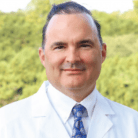
Dr. McGee has been practicing plastic surgery for more than 18 years in all areas of the field, including cosmetic surgery and reconstructive breast and facial surgery. Dr. McGee is board certified by the American Board of Plastic Surgery and the American Board of Surgery. He has numerous hospital affiliations in the Round Rock and greater Austin areas and is a member of the American Society of plastic Surgeons, American Society for Aesthetic Plastic Surgery, American College of Surgeons and Austin Smiles.
Disclaimer: The contents of the Westlake Dermatology website, including text, graphics, and images, are for informational purposes only and are not intended to substitute for direct medical advice from your physician or other qualified professional.
Breast augmentation recovery details can truly help someone know what to expect day by day. Clear guidance on pain management, activity limits, and signs of healthy healing may ease fears about the post surgery period. Great post!