
Dry Brushing for Skin: What It Can and Can’t Do
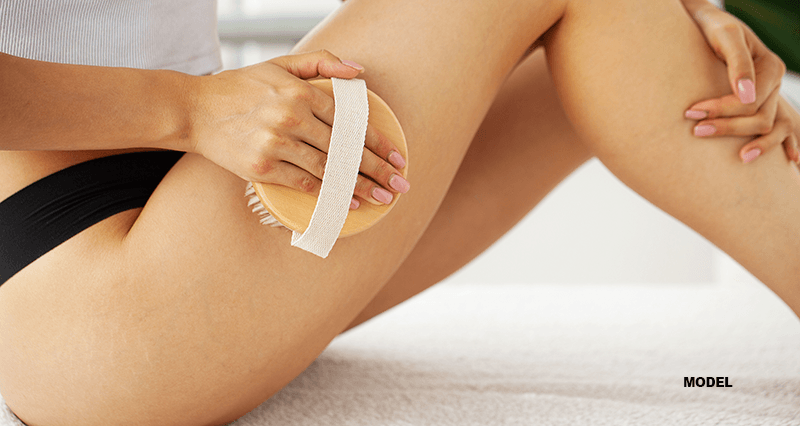
Dry brushing has become a popular wellness and skincare ritual, often touted as a way to exfoliate, boost circulation, stimulate lymphatic drainage, and even reduce the appearance of cellulite. However, most of the claimed benefits often overstated. Before grabbing a brush and jumping in, it is important for people to understand what benefits dry brushing can really provide.
Here’s the truth: while dry brushing can provide certain surface-level benefits, the improvements are typically mild and temporary. It’s also not effective for addressing cellulite in any meaningful way.
What Is Dry Brushing for Skin Care?
Dry brushing is a form of physical exfoliation that involves using a firm, natural-bristle brush on dry skin, most often performed before showering. The brush is moved across the body in sweeping strokes, often directed toward the heart.
Unlike chemical exfoliants, which dissolve dead skin cells at a molecular level, dry brushing manually removes buildup from the outermost layer of skin (the stratum corneum). This mechanical friction loosens dry, flaky cells and stimulates the skin’s surface.
Dry brushing is typically performed on the body, including the legs, arms, abdomen, and back. The brushing motion does increase superficial blood flow, which explains the pink or flushed appearance many people notice immediately afterward. While this can create a temporary glow, it does not represent deeper structural changes in the skin.
What Benefits Can Dry Brushing Realistically Provide?
Overall, dry brushing should be considered as a mild, surface-level exfoliation technique that supports smoother texture and product absorption rather than a transformative skin treatment.
When done properly, dry brushing can leave skin feeling noticeably smoother and softer immediately after use. By removing surface buildup, moisturizers may absorb more evenly, and self-tanners may apply more uniformly.
You may also notice a temporary glow due to increased surface circulation. This flushed appearance typically fades within a short period of time. While the boost in blood flow may contribute to overall skin vitality, it does not tighten skin or stimulate significant collagen production.
It is important to keep expectations realistic. Dry brushing does not reduce stretch marks, tighten loose skin, eliminate cellulite, or significantly improve pigmentation. The smoothing effect is superficial and must be maintained through regular use.
Is Facial Dry Brushing Beneficial?
Most people should avoid dry brushing their face as the facial skin is significantly thinner and more delicate than the skin on the arms, legs, and torso. It contains a more complex network of sebaceous glands, blood vessels, and nerve endings, making it more prone to irritation and inflammation. Even dry brushes marketed as being “soft” or “facial” can create unnecessary friction.
The risks of facial dry brushing include irritation, persistent redness, skin barrier disruption, increased dryness, and worsening of conditions such as rosacea or acne. Over-exfoliation can compromise the skin barrier, leading to increased sensitivity and difficulty tolerating active skincare ingredients.
For patients seeking smoother texture, improved radiance, or anti-aging benefits on the face, we recommend evidence-based alternatives. Topical chemical exfoliants containing alpha hydroxy acids (AHAs) or beta hydroxy acids (BHAs) provide more controlled and uniform exfoliation. In-office procedures such as chemical peels, microneedling, and laser resurfacing offer deeper, more predictable improvements in tone, texture, and collagen stimulation.
How To Dry Brush Correctly
For anyone who wishes to move forward with dry brushing, here is a run down on how to do it properly:
Choosing The Right Brush
Not all dry brushes are created equal. Choosing the appropriate brush can help reduce irritation and improve safety.
Look for a brush made with natural bristles, which tend to be gentler and less abrasive than synthetic alternatives. The bristles should feel firm enough to exfoliate but flexible enough to avoid scratching the skin.
Avoid extremely stiff or coarse brushes, especially if you have sensitive or dry skin. For beginners, starting with a softer brush is often best.
Some brushes include a long handle for reaching the back and shoulders, while others are handheld. The choice depends on personal preference and ease of use.
Correct Dry Brushing Technique
Proper technique is essential to maximize benefits and minimize irritation.
- Start with completely dry skin before showering.
- Use light to moderate pressure. The strokes should feel stimulating but never painful.
- Begin at the feet and move upward toward the heart using long, sweeping strokes.
- On the arms, brush from the hands toward the shoulders.
- Use circular or upward motions on the abdomen and back.
- Limit brushing to about 3 to 5 minutes for a full-body session.
After brushing, shower to rinse away loosened skin cells. Follow immediately with a fragrance-free moisturizer to replenish hydration and support the skin barrier.
Clean your brush regularly and allow it to dry completely between uses.
Dry Brushing Frequency: How Often Should You Dry Brush
The right dry brushing frequency can vary and depends on each individual’s skin type and sensitivity.
For most individuals with normal skin, dry brushing 2 to 3 times per week is sufficient to maintain smoothness without compromising the skin barrier. Those with sensitive or dry skin may benefit from limiting brushing to once weekly. Over-brushing can lead to irritation, increased dryness, and barrier disruption.
Daily dry brushing is generally not necessary and may increase the risk of inflammation, particularly if combined with other exfoliating products such as retinoids, AHAs, or BHAs.
As with any exfoliation method, moderation is the key to avoiding over exfoliation. If you notice persistent redness, stinging, flaking, or increased sensitivity, reduce frequency or discontinue use.
Side Effects of Incorrect Dry Brushing
When done too aggressively or too frequently, dry brushing can cause more harm than benefit.
Skin Irritation and Redness
Excess pressure can lead to inflammation, prolonged redness, and sensitivity. The skin may feel tight or uncomfortable afterward.
Barrier Damage and Increased Dryness
Over-exfoliation can weaken the skin barrier, increasing water loss and worsening dryness rather than improving it.
Worsening of Chronic Skin Conditions
Dry brushing should be avoided in individuals with eczema, psoriasis, rosacea, active acne, or broken skin. It may exacerbate already occurring symptoms and trigger flare-ups.
Dry Brushing Is Ineffective For Cellulite
We cannot say this clearly enough: dry brushing is ineffective for addressing cellulite!
Cellulite is caused by fibrous bands beneath the skin that tether fat downward, creating dimpling. The only way to correct cellulite is to address these bands through structural intervention; requiring a treatment that is far more powerful than running a brush along the skin.
If cellulite reduction is your primary goal, more targeted treatments are significantly more effective. In my experience, the most effective treatments to visually minimize cellulite include:
- Subcision, a minimally invasive procedure that releases the fibrous bands responsible for dimpling
- Avéli, a targeted cellulite treatment designed to precisely identify and release individual septa that cause visible depressions
These treatments directly address the underlying cause of cellulite rather than temporarily improving surface appearance. Compared to these procedures, dry brushing provides extremely minimal improvement and should not be considered corrective.

Caroline Berry, MPAS, PA-C, Certified Physician Assistant, graduated from the University of Texas Health Science Center at San Antonio where she was recognized as a Dean’s scholar upon earning a Master of Physician Assistant Studies. She is certified by the National Commission for Physician Assistants and is licensed through the Texas Medical Board. She is also a member of the Texas Association of Physician Assistants and the Society of Dermatology Physician Assistants.
Disclaimer: The contents of the Westlake Dermatology website, including text, graphics, and images, are for informational purposes only and are not intended to substitute for direct medical advice from your physician or other qualified professional.