
Lipedema vs Cellulite: What Is the Difference?

Lipedema and cellulite are easily confused as both involve fat and create the appearance of irregular skin texture along the legs. They are, however, two very different conditions. Cellulite is an extremely common concern that is purely cosmetic. Lipedema is a chronic medical condition that can cause pain, swelling, and effect mobility over time (especially when left untreated in certain susceptible individuals).
What Is Lipedema?
Lipedema is a chronic adipose tissue (fat) disorder characterized by abnormal fat accumulation in the subcutaneous space, most commonly affecting the hips, thighs, and calves. The condition typically develops symmetrically and often spares the feet, creating a noticeable “cuffing” appearance at the ankles or wrists.
Lipedema is categorized into stages of severity, from stage 1 to stage 4. Often stage 2 lipedema is most confused with cellulite as it results in the skin having an “orange peel”-like texture with dimpling. However, the dimples are often larger than cellulite, typically ranging from pea to walnut size.
Unlike common weight gain, lipedema fat is not as easily responsive to diet or exercise. The condition can be progressive, meaning symptoms can worsen over time if not properly managed.
What Is Cellulite?
Cellulite is a very common condition that affects the appearance of the skin rather than overall health. It occurs when fibrous connective tissue beneath the skin pulls downward creating dimpling along the skin. Cellulite can appear as discrete, deep dimples (often on the buttocks), a horizontal mattress appearance (often on the thighs), or a firm, orange-peel texture of the skin.
Cellulite affects most women at some point in their lives and can occur at any age, weight, or fitness level. Unlike lipedema, cellulite is not a disease and does not pose a health risk.
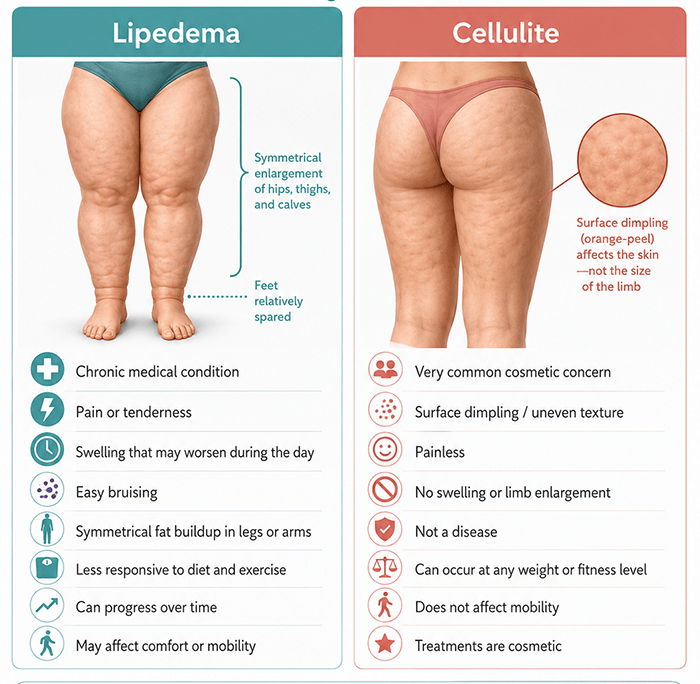
Lipedema vs Cellulite: Key Differences Explained
Symptoms and Appearance
Lipedema typically presents as disproportionate fat accumulation in the legs or arms, often accompanied by swelling that worsens throughout the day. The affected tissue often feels painful or tender and bruises easily.
Cellulite appears as surface dimpling or uneven texture. Cellulite does not cause swelling or changes in limb size and is limited to the skin’s appearance.
Pain and Sensitivity Differences
The existence of pain is often one of the most important distinguishing factors between the two issues:
- Lipedema commonly causes pain, tenderness, pressure sensitivity, and easy bruising.
- Cellulite is painless and does not result in any sensitivity along the skin
Effect on Overall Health
Lipedema can affect mobility, daily comfort, and quality of life, especially in advanced cases, where lipedema can contribute to secondary issues such as joint strain or lymphatic dysfunction.
Cellulite does not affect one’s physical health; there is no impairment to function or form beyond aesthetic concerns.
Progressiveness
Lipedema is a progressive condition, meaning that without proper treatment or management fat accumulation and symptoms may increase over time. This is especially true during periods of hormonal changes.
While the aesthetic appearance of cellulite can worsen over time (i.e. dimpling may become more severe or spread to larger areas of the skin) it will never progress into a medical condition.
Causes
Lipedema is believed to be influenced by genetics and hormonal factors, with abnormal fat cell growth and inflammation playing a role. Symptoms often begin to manifest or worsen during puberty, pregnancy, or menopause.
Cellulite is caused by structural differences in connective tissue, fat distribution, hormones, and skin elasticity. Genetics and aging also play a role.
Who Is Most Likely to Develop Each
Another reason for the confusion between lipedema and cellulite is that both issues affect mostly women. The major difference is that lipedema often runs in families, with many patients reporting a family history of similar symptoms.
Prevention Options
There is currently no known way to prevent lipedema. Early recognition and management may help slow progression and reduce symptom severity.
Unfortunately, cellulite can also not be completely prevented. Healthy lifestyle habits may help minimize its appearance, but they do not eliminate it.
Treatment Options
Lipedema treatment often begins with conservative management, including compression therapy, manual lymphatic drainage, and movement-based therapy. In appropriate candidates, specialized liposuction may reduce pain, swelling, and disease burden (Herbst, 2012).
Cellulite treatments are cosmetic and effective options may include injectable treatments, energy-based devices, and minimally invasive procedures. Topical products have limited and temporary effects.
Can Lipedema and Cellulite Exist at the Same Time?
Yes, many patients have both lipedema and cellulite. Lipedema affects fat volume and distribution, while cellulite affects the structure of the skin. Treating lipedema does not automatically improve cellulite, and treating cellulite does not address lipedema-related symptoms.
How to Tell If It Is Lipedema or Cellulite
Signs that may suggest lipedema rather than cellulite include:
- Painful or tender fat
- Easy bruising
- Symmetrical enlargement of the legs or arms
- Swelling that worsens as the day progresses
- Fat that does not respond to weight loss
Since the two issues can coexist, it is always recommended to undergo a professional evaluation is essential for accurate diagnosis.
How Each Condition Is Diagnosed
Lipedema is diagnosed clinically through a detailed medical history and physical examination. There is no single blood test or imaging study that definitively confirms lipedema, which is why it is often underdiagnosed or misdiagnosed (Forner-Cordero et al., 2012).
Cellulite does not require an extensive medical diagnosis, its existence can be confirmed through a simple visual assessment
Insurance Coverage Differences
Depending on severity, some insurance plans may consider lipedema treatment medically necessary when conservative therapies have failed and symptoms significantly impact daily functioning. Patients are advised to confirm the potential for coverage with their insurance provider directly.
Cellulite treatments are considered cosmetic and are not covered by medical insurance.
Final Thoughts
Although lipedema and cellulite can appear similar, they are fundamentally different conditions. Cellulite is common and cosmetic, while lipedema is a chronic medical condition that can progress over time. Proper diagnosis is key to choosing the right treatment approach and setting realistic expectations.
A consultation with a qualified provider can help determine whether symptoms are related to lipedema, cellulite, or both, and guide appropriate next steps.
Works Cited
American Academy of Dermatology. (n.d.). Cellulite: Overview. https://www.aad.org/public/cosmetic/fat-removal/cellulite-treatments-what-really-works
Forner-Cordero, I., Szolnoky, G., Forner-Cordero, A., & Kemény, L. (2012). Lipedema: An overview of its clinical manifestations, diagnosis, and treatment. Journal of the American Academy of Dermatology, 67(2), 289–299. https://pubmed.ncbi.nlm.nih.gov/25586162/
Herbst, K. L. (2012). Subcutaneous adipose tissue diseases: Dercum disease, lipedema, and Madelung disease. Journal of the American Academy of Dermatology, 67(3), 423–431. https://www.ncbi.nlm.nih.gov/books/NBK552156/
Wold, L. E., Hines, E. A., & Allen, E. V. (1951). Lipedema of the legs: A syndrome characterized by fat legs and edema. Annals of Internal Medicine, 34(5), 1243–1250. https://pubmed.ncbi.nlm.nih.gov/14830102/

Elizabeth Geddes-Bruce, MD is a board certified dermatologist and dermatologic surgeon specializing in the practice of both cosmetic and medical dermatology. Dr. Geddes-Bruce is fellowship-trained in cosmetic dermatology and laser surgery. She served as Chief Resident at one of the nation’s top dermatology programs – The University of Texas at Houston and M.D. Anderson Cancer Center.
Disclaimer: The contents of the Westlake Dermatology website, including text, graphics, and images, are for informational purposes only and are not intended to substitute for direct medical advice from your physician or other qualified professional.