
8 Surprising Body Areas to Try Microneedling
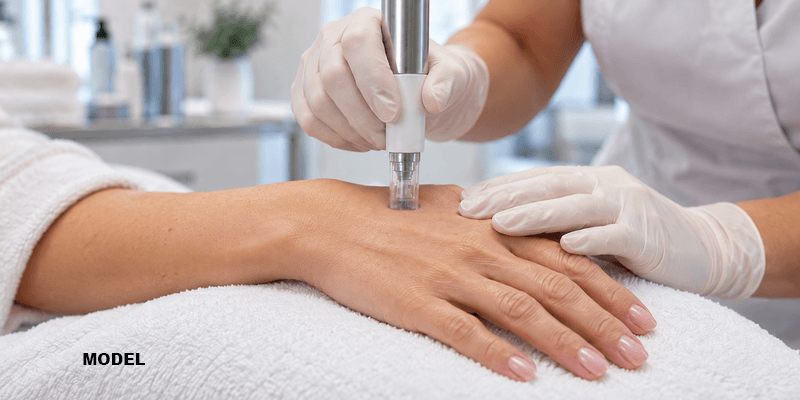
Microneedling is best known as a facial rejuvenation treatment, often used to improve acne scars, fine lines, enlarged pores, uneven texture, and overall skin quality. Microneedling works by creating tiny, controlled micro-injuries in the skin. This process encourages the body’s natural repair response and boosting new collagen formation which results in firmer and more youthful appearing skin.
The face is not the only area where the collagen stimulation benefit of microneedling can be helpful. More patients are now asking about microneedling in other areas like the neck, chest, hands, stomach… even the buttocks. These areas experience issues including crepey skin, rough texture, stretch marks, scars, sun damage, and early signs of thinning or aging skin.
| Treatment Area | What Microneedling May Improve |
| Hands | Crepey skin, fine lines, and rough texture |
| Buttocks | Uneven texture, stretch marks, scars, and post-inflammatory marks |
| Upper Arms | Mild crepiness, stretch marks, and textural changes |
| Knees and Elbows | Rough texture, fine wrinkles, and crepey skin |
| Neck | Fine lines, mild crepiness, uneven texture, and early laxity |
| Chest (Décolletage) | Fine lines, crepey skin, and rough texture |
| Abdomen | Stretch marks, surgical scars, and uneven texture |
| Thighs and Hips | Stretch marks and textural irregularities |
Microneedling for the Hands
The hands are one of the most visible areas of aging, but they are often overlooked in skin rejuvenation plans. Over time, the backs of the hands can develop thin, crepey skin, rough texture, fine lines, and sun-related changes.
Microneedling may help improve the texture and skin quality of the hands by stimulating collagen production in an area where the skin often becomes thinner with age. For patients who notice that their hands look dull, wrinkled, or rough, microneedling may help create a smoother, healthier-looking surface over time.
However, microneedling is not the best choice for all forms of hand rejuvenation. If the main issue is volume loss, prominent veins, or brown sun spots, other treatments such as fillers, lasers, or pigment-focused therapies may be more appropriate. Microneedling is most useful when the primary concern is skin texture, fine lines, and crepiness.
Microneedling for the Buttocks
Yes, butt microneedling is a thing! It is becoming a more requested treatment area, especially for patients dealing with rough texture, acne marks, folliculitis-related discoloration, stretch marks, or mild crepiness.
For the buttocks, microneedling should be thought of as a tool to improve skin appearance. It will not lift or reshape the buttocks. However, it may help improve the look of surface-level concerns such as post-inflammatory marks, scars, stretch marks, or uneven texture.
One important note: patients with active folliculitis, inflamed bumps, or open lesions should be evaluated prior to treatment. Microneedling over active inflammation can worsen irritation or increase the risk of complications.
Microneedling for Arms
The upper arms can develop crepey skin, mild textural changes, and stretch marks, especially after aging, weight loss, pregnancy, or changes in muscle and fat distribution. Some patients also notice roughness or uneven tone in this area.
Microneedling can improve upper arm skin quality by encouraging collagen production and supporting smoother texture. It’s a viable treatment option for patients with mild crepiness or stretch marks who do not require surgical intervention.
That said, microneedling will not remove significant loose skin. Patients with more prominent skin sagging will require surgical intervention like arm lift (brachioplasty) surgery.
Microneedling for the Knees and Elbows
The knees and elbows often develop rough, thickened, wrinkled, or crepey skin because of movement, friction, dryness, and aging. Microneedling can be used to improve texture in both areas.
Knee or elbow microneedling is best suited for patients looking for gradual improvement in skin quality rather than dramatic tightening. Since skin around joints moves frequently and may be thicker or more textured, treatment plans may need to be adjusted.
Microneedling for the Neck
With natural aging, many patients may notice fine horizontal lines, mild crepiness, uneven texture, or early skin laxity. The collagen boosting effect of microneedling can improve dermal support in the area, helping the neck appear smoother, firmer, and more refreshed.
Neck microneedling requires a careful approach. The skin is delicate, and treatment settings may need to be adjusted based on skin thickness, sensitivity, and the patient’s goals.
As with other areas, microneedling will not fully correct significant loose skin or deep neck bands. Patients with those indications may require neck lift surgery.
Microneedling for the Chest
The chest, or décolletage, is an area that experiences signification aging due to photo aging and collagen loss. Patients often develop fine lines, crepey texture, uneven tone, and roughness in this area, especially after years of sun exposure.
Chest microneedling is a useful treatment option for crepey skin, fine lines, and rough texture. However, it will not address pigmentation (sun spots) or significant redness. Those issues will require the addition of laser or light-based treatments.
Microneedling for the Abdomen
The stomach or abdomen is one of the most practical and commonly discussed body areas for microneedling. Many patients are interested in treating common midsection issues including stretch marks, scars (from procedures like c-section or abdominoplasty), or textural changes after pregnancy, weight fluctuations, or surgery.
Microneedling is a great treatment option for both stretch marks or scars as both of those indications involve changes in the skin’s collagen structure. The controlled micro-injurie created through microneedling encourages collagen remodeling within the skin, helping to soften the appearance of these marks over time. The final result are scars or stretch marks that are smoother, softer, or less noticeable.
Microneedling for the Thighs and Hips
Like the abdomen, the thighs and hips are common areas for stretch marks and textural irregularities, especially after growth spurts, pregnancy, muscle gain, weight changes, or hormonal shifts.
Microneedling can improve the appearance of stretch marks, but it does not remove them completely. Patients typically need multiple sessions, and the degree of improvement depends on factors such as stretch mark age, color, depth, skin type, and treatment plan.
Areas Where Microneedling May Not Be the Best Choice
Microneedling is very versatile and can be performed on many different body areas. However, that does not mean microneedling is right for every skin concern or every patient. Treatment may need to be delayed or avoided if the treatment area has active acne, folliculitis, infection, open wounds, eczema, dermatitis, recent sunburn, or a damaged skin barrier.
Patients with a history of keloids, abnormal scarring, or certain medical conditions that affect healing should also be evaluated carefully before treatment. An in-person consultation with a skilled microneedling provider can determine whether microneedling is safe, appropriate, and able deliver desired results.
Should You Microneedle Yourself (DIY Microneedling)?
While DIY (at-home) microneedling may sound appealing, professional microneedling is safer, more customizable, and far more effective. An experienced provider will tailor each treatment to patient need by adjusting the needle depth and treatment intensity based on the area being treated, the patient’s skin type, and the specific issue(s) requiring treatment.
Professional microneedling treatments can create more controlled micro-injuries providing better results in fewer sessions. In-office treatment also reduces risks like irritation, infection, and improper technique by using sterile tools and professional oversight.
What Results Can Patients Expect?
Microneedling provides numerous benefits and can meaningfully transform the skin. However, patients should understand that results occur gradually. Microneedling usually requires a series of treatments, and results tend to develop over weeks to months as collagen remodeling occurs.
While noticeable improvement can occur after a single session, most patients will achieve their desired final result overtime as collagen remodeling develops.
The final result will depend on a number of factors including:
- Treatment area
- Treatment depth
- The patient’s baseline skin condition / appearance
- The patient’s unique healing response
- Number of treatment sessions performed
- Whether microneedling is combined with other treatments like PRP OR PDRN
- After care (especially continued sun protection)
The Bottom Line
Microneedling is not just a facial treatment. It can also be used on unexpected areas like the hands, neck, chest, abdomen, buttocks, thighs, hips, upper arms, knees, elbows, and surgical scars. This can help improve skin texture, fine lines, crepiness, scars, stretch marks, and overall skin quality in whatever body area it is performed on.
To get the best results, opt for professional microneedling by an experienced provider who can evaluate the skin, choose the right treatment settings, and determine whether microneedling is the best option for your specific needs.

Kristi Cardona is a Licensed Aesthetician and Laser Technician. Since 2008, she has worked as a Certified Medical Assistant in MOHS Surgery, Cosmetic Surgery, and General Dermatology, alongside some of the most respected Dermatologists and Plastic Surgeons in the city of Austin. Kristi is trained in laser and cosmetic procedures including Laser Hair Removal, Chemical Peels, HydraFacial MD, Acne Facials, Microneedling, Microdermabrasion, Dermaplaning, CoolTouch, and CoolSculpting.
Disclaimer: The contents of the Westlake Dermatology website, including text, graphics, and images, are for informational purposes only and are not intended to substitute for direct medical advice from your physician or other qualified professional.