
Eyebrow Hair Transplant: A Permanent Fix for Sparse Brows

Eyebrows play a prominent role in facial aesthetics, affecting facial expression, balance, and symmetry. When the brows become thin, patchy, or uneven, it can negatively change the way the entire face looks. Many patients try pencils, powders, growth serums, tinting, or microblading, but these options require maintenance and may not restore actual eyebrow hair.
An eyebrow hair transplant offers a minimally invasive and permanent solution: strategically relocating healthy hair follicles from another area of the body, usually the scalp, into the eyebrow area.
What Is an Eyebrow Hair Transplant?
An eyebrow hair transplant (or eyebrow transplant) is a small, highly detailed hair restoration procedure designed to improve eyebrow fullness, shape, symmetry, or density. It uses the same basic principle as a traditional scalp hair transplantation: healthy hair follicles are carefully harvested from a donor area and placed into areas where hair is thin or missing. After placement, transplanted follicles establish blood flow and enter the normal hair growth cycle; producing natural-looking eyebrow hair.
You can think of an eyebrow transplant as a smaller, more specialized hair transplant procedure. It requires far less follicles, making it more approachable in terms of both cost and recovery time.
One big difference, however, is artistry. While hairline creation (in scalp hair transplant) does require an artistic touch, eyebrow transplant requires a significantly higher attention to detail. Natural looking eyebrow transplant results requires very specific graft placement so that new hair growth matches surrounding eyebrow hair (in terms of angle and direction). This is why it is important to choose an experienced eyebrow transplant surgeon.
Common Causes of Eyebrow Thinning or Loss
Thinning or balding of the eyebrows can happen for many reasons including:
- Over-Plucking, Waxing, or Threading
- Natural Aging
- Genetics
- Medical Conditions
- Trauma, Burns, or Scarring.
- Cancer Treatment or Medication-Related Hair Loss
Regardless of the original cause, an eyebrow hair transplant may be able to restore fullness in areas where brow hair has become thin, patchy, or permanently lost.
However, if eyebrow loss is sudden, worsening, or related to an active medical condition, the underlying issue should be evaluated and treated first to help protect the final result
Eyebrow Transplant Benefits
Eyebrow transplants can dramatically and permanently enhance brow fullness, shape, balance, or definition. Since the procedure restores real hair, it can provide results that look and feel more natural than cosmetic camouflage alone.
Potential benefits include:
- Filling in sparse or patchy areas
- Improving eyebrow shape.
- Correcting asymmetry.
- Restoring hair after over-plucking or trauma
- Creating natural-looking fullness.
A well-designed eyebrow transplant should not look overly dense or artificial. The goal is to enhance the brows in a way that complements the patient’s facial features and creates natural-looking shape and symmetry.
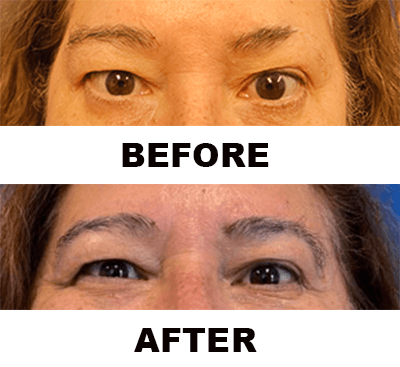
Before and after an eyebrow hair transplant to restore hair lost following surgical removal of a skin lesion on the left eyebrow. After photo taken 6 months following the procedure.
How Is Eyebrow Transplant Performed?
The most important step of any eyebrow transplant is the initial consultation and eyebrow design process. Detailed planning is important because even small changes to eyebrow shape can affect facial expression and balance. The surgeon evaluates the patient’s existing brow hair, areas of thinning, facial structure, and desired brow shape to determine factors like how many grafts are needed, the ideal donor area, and transplant-specific factors to ensure re-growth looks natural.
Once the design is finalized, hair follicles are harvested from a donor area. In most cases, donor hair is taken from the scalp, often from an area where the hair is healthy and reliable. These follicles are then prepared into small grafts and placed into the eyebrow area one at a time.
Since eyebrow transplant usually requires fewer transplanted follicles, FUE (follicular unit extraction) is often the preferred method of harvesting follicle. However, FUT methods can also be used. To learn more about FUE and FUT, read this blog post.
In either approach, the key is preserving healthy follicles and placing them with precision. When transplanting the follicles, the surgeon must carefully control:
- the angle of each hair
- the direction of growth
- the density of the grafts
- the shape of the brow
- the transition between existing and transplanted hair
- the use of single-hair grafts for a softer, more natural look
This is the most important part of the procedure. Natural-looking eyebrow transplant results depend on placing each graft in a way that mimics normal eyebrow growth.
Why Can Scalp Hair Be Used To Replace Eyebrow Hair?
This is a common question from prospective patients. The answer is that hair follicles are living structures. When they are carefully moved to a new location and establish blood supply, they can continue producing hair. We discuss the science of the how transplants work in this previous blog post.
How Soon Are Results Realized?
Eyebrow transplant results, like the results of any hair transplant procedure, take time. Patients may see the general shape of the new brow immediately after the procedure as transplant follicles fill in the new brow design. However, it can take a few months for hair to regrow.
Here is a typical results timeline:
- First week: Mild redness, swelling, and small scabbing begin to heal
- First few weeks: Transplanted hairs may shed (known as “shock loss”)
- 3 to 4 months: Transplanted follicles enter the growth stage, new hair growth begins
- 6 to 9 months: Brows often look fuller and more developed
- 9 to 12 months: Most patients achieve their final desired result
As with any procedure, this timeline can vary greatly from patient to patient based on factors like the number of grafts transplanted and the patient’s unique healing response.
Are Eyebrow Transplant Results Permanent?
Yes, eyebrow transplant results are generally considered permanent since successfully transplanted follicles in the brow continue to produce hair long term.
That said, patients should understand that eyebrow transplant does require some maintenance:
Regular Trimming: One interesting thing to note: because the donor hair often comes from the scalp, the transplanted hairs continue to grow longer than surrounding natural eyebrow hairs. This is why patients need to periodically trim after the brows fully grow in.
Hair Training: Starting about two months after the brow transplant, patients use a dab of hair gel daily on the immature brow hairs to train them to lay flat and in the desired direction. This process continues for approximately 6-months then discontinues after the transplanted brow hairs have learned to grow in the desired angle and direction.
Is The Procedure Painful?
Eyebrow transplantation is performed utilizing local anesthesia, (like going to the dentist), so the patients do not feel discomfort while the procedure is being performed. Post-procedure discomfort is rarely, if ever, described by the patients.
What Is Downtime Like?
Eyebrow transplant is a minimally invasive procedure and recovery or downtime is typically simple. Patients may experience mild redness, swelling, tenderness, and small scabs around the transplanted hairs following the procedure. Patients should also focus on avoiding any actions that may disturb the grafts, like rubbing or scratching the brow.
Most patients start to look more socially presentable once the initial redness and scabbing improve, usually within the first 7 to 10 days. However, patients should avoid using an eyebrow pencil or any other makeup product in the brow area until fully cleared by your surgeon. Applying or removing makeup too early can irritate the skin or disturb the healing follicles. If camouflage is needed during early recovery, it is best to plan around social downtime, wear glasses or sunglasses when appropriate, and follow the specific aftercare instructions provided by your surgeon.
As with any cosmetic procedure, proper aftercare is vital to both achieving optimal results and recovering quickly. Patients should follow their surgeon’s instructions closely, avoid disturbing the grafts, and be gentle with the brow area while it heals.

Robert J. Reese, DO, is a board-certified general surgeon who has performed hair restoration procedures since 1999. He is experienced in both FUE and FUT hair transplantation and treats hair loss affecting the scalp, eyebrows, mustache, sideburns, and beard. Dr. Reese is a past president of the American Board of Hair Restoration Surgery and was named a Fellow of the International Society of Hair Restoration Surgery as part of its inaugural class. Dr. Reese views hair restoration as a reconstructive process that can help patients regain both their hair and their sense of confidence.
Disclaimer: The contents of the Westlake Dermatology website, including text, graphics, and images, are for informational purposes only and are not intended to substitute for direct medical advice from your physician or other qualified professional.