
Can Face Patting or Face Tapping Really Improve Your Skin?
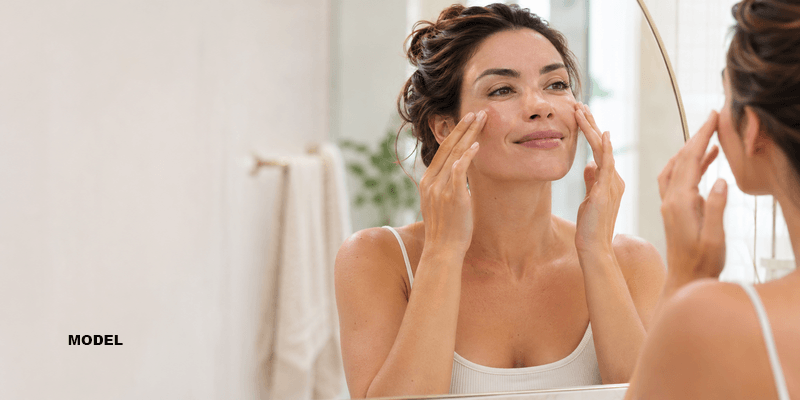
From gua sha to face yoga, there is no shortage of manual (physical) facial manipulation techniques promising to make skin look smoother, brighter, tighter, or younger. Two increasingly popular practices our patients ask us about are face patting and face tapping.
While they may sound similar, these are two different practices that are performed with different goals in mind. Face patting typically refers to gently pressing or patting skincare products onto the skin instead of rubbing them in. Face tapping, on the other hand, involves rhythmically tapping the face with the fingertips as a form of facial massage, often with claims that it can improve circulation, reduce puffiness, stimulate collagen, or even lift and sculpt the face.
Unfortunately, neither face patting nor face tapping delivers the dramatic results often promised on social media. But does that mean these techniques offer no benefits at all? This blog post will take an in-depth look at each technique to see if they make any difference for the skin.
Face Patting vs. Face Tapping: What’s the Difference?
Face patting is primarily a method of applying skincare. Rather than spreading a serum, moisturizer, or other product across the face with a rubbing motion, the product is gently pressed or patted into the skin using the fingertips or palms.
Face tapping is performed more intentionally as a type of facial massage. The fingertips repeatedly tap different areas of the face, such as the forehead, cheeks, under-eye area, jawline, and sometimes the neck. It may be performed on bare skin or while applying a skincare product.
The difference may sound subtle, and often comes down to force intensity, but it becomes important when considering the claims surrounding each technique. Patting is supposed to help skincare work better, while tapping is often promoted as a way to change how the skin and even the contours of the face look.
How Is Face Patting Performed
Face patting is a gentle method of applying skincare products with a goal of minimizing rubbing or massaging product into the skin. The technique typically involves dispensing a small amount of product onto the fingertips or palms, lightly spreading it between the hands, and then gently patting it across the face.
Rather than dragging the fingers over the skin, the focus is on applying the product with repeated light presses until it is evenly distributed and mostly absorbed.
Patting can be performed with a variety of products, including:
- Toners and essences
- Serums
- Eye creams
- Moisturizers
- Facial oils
The goal is to apply the product while minimizing pulling and friction. Although this can be a gentle way to handle the skin, patting does not necessarily help the product penetrate more deeply or make its ingredients more effective.
Does Patting Help Skincare Absorb Better?
The short answer: most likely no. The idea behind patting is that it somehow “pushes” its ingredients deeper into the skin. Product penetration is more dependent on factors like its ingredients, concentration, formulation, and the condition of the skin barrier, not whether it is patted or smoothed onto the face.
Some research even suggests the opposite, that rubbing or massaging certain topical products can increase penetration. However, this varies by product and does not mean skincare should be rubbed in aggressively.
The bottom line: Apply the recommended amount evenly and consistently.
Is Patting Better for Sensitive Skin?
This is one of the benefits of patting; it does create less friction than vigorous rubbing. So, someone who tends to aggressively rub products onto the face may find that patting reduces friction and pulling. This may be helpful around the eyes or when the skin is dry, sensitive, or irritated.
However, gently smoothing a product over healthy skin is not harmful. The important thing is to avoid excessive rubbing, pulling, or scrubbing, especially if you have an easily irritated condition such as rosacea.
The bottom line: The benefit is probably not that patting possesses a special skin-enhancing property. It may simply encourage people to handle their skin more gently.
Can Patting Give Your Skin a Glow?
Patting may yield a slight and temporary glow (emphasis on slight and temporary). Repeatedly patting the face may stimulate superficial circulation, potentially leaving the skin looking slightly pinker or brighter immediately afterward. The product itself may also hydrate the skin, soften the appearance of fine lines, or add a more luminous finish.
The bottom line: These effects can make the complexion look temporarily refreshed immediately after application, but any effect will fade with time.
How Is Face Tapping Performed?
Face tapping involves using the fingertips to lightly and rhythmically tap different areas of the face. Unlike face patting, which is primarily a way to apply skincare products, face tapping is typically performed as a form of facial massage or stimulation.
The technique usually involves:
- Starting with clean hands and a clean face
- Using the pads of the fingertips rather than the nails
- Gently tapping across the forehead, cheeks, under-eye area, jawline, and neck
- Moving between areas with quick, repeated tapping motions
- Continuing for several seconds or minutes
Face tapping can be performed on dry skin or while applying a serum, moisturizer, or facial oil. The pressure should remain light and comfortable, particularly around the delicate eye area.
Can Face Tapping Improve Circulation?
Face tapping can provide some circulation improvement, but the effect is only temporary. While research has focused more on facial rollers and massage than fingertip tapping, tapping may produce a similar effect (increased blood flow near the skin’s surface).
This temporary increase in circulation may make the skin appear rosier or brighter. However, it does not repair wrinkles, increase collagen, or create lasting skin rejuvenation.
The bottom line: Face tapping can produce a short-term glow, but any benefits are temporary.
Can Face Tapping Reduce Puffiness?
Gently manipulating the face may help redistribute superficial fluid, making some areas appear less puffy for a short time. However, tapping is not the same as professional manual lymphatic drainage, and there is little evidence that it meaningfully improves lymphatic function.
The bottom line: Tapping may temporarily reduce the appearance of mild puffiness, but it cannot remove facial fat or permanently change facial contours.
Can Face Tapping Sculpt the Face or Define the Jawline?
If tapping temporarily reduces puffiness, the cheekbones or jawline may appear more noticeable. However, the result is definitely not as dramatic or redefining as some influencers make it out to be. Tapping cannot reshape facial bones, reposition fat, or remove unwanted fat beneath the chin or cheeks.
The bottom line: Any sculpting effect is likely subtle and temporary.
Can Face Tapping Reduce Wrinkles?
There is little evidence that face tapping reduces the appearance of line and wrinkles. Wrinkles develop due to collagen and elastin loss, repeated facial expressions, sun exposure, volume changes, genetics, and normal aging. Temporarily increasing circulation does not reverse these underlying causes.
The bottom line: Face tapping may temporarily improve the appearance of fine lines, but it does not correct wrinkles.
Does Face Tapping Stimulate Collagen Production?
Skin cells can respond to certain types of mechanical stimulation, and preliminary research has examined how massage devices may affect collagen-related processes. However, light fingertip tapping probably does not provide enough stimulation to meaningfully increase collagen production.
Treatments such as microneedling, fractional laser resurfacing, radiofrequency, and biostimulator injectables are specifically designed to trigger collagen remodeling. Making the skin temporarily pink through tapping is not equivalent.
The bottom line: There is currently no good evidence that routine face tapping meaningfully increases collagen.
Can Face Tapping Tighten Sagging Skin?
Skin laxity develops as collagen, elastin, facial fat, and deeper supporting tissues change over time. Tapping cannot tighten stretched skin or reposition sagging tissues.
A temporary reduction in puffiness may make the face look slightly more defined, but it does not create true skin tightening.
The bottom line: Face tapping cannot meaningfully lift or tighten sagging skin.
Is Face Patting or Face Tapping Worth Trying?
The bottom line is that neither face patting nor face tapping is likely to transform your skin. Face patting may be a gentler way or applying skincare products and face tapping may provide some short-term visual effects. But there is no research showing either helps enhance skincare product efficacy or provides meaningful anti-aging benefits.
But that doesn’t necessarily mean you need to abandon either practice. If patting or tapping feels good and makes you more consistent with a healthy skincare routine, that alone may be enough reason to do it. Neither technique (when performed correctly) will harm the skin, and if either encourages routine consistency, they are well worth it!

Yelena Dokic, MD is a Board Certified Dermatologist and Board Certified, Fellowship-Trained Mohs surgeon at Westlake Dermatology. She practices surgical, cosmetic, and medical dermatology, with particular expertise in skin cancer treatment, Mohs surgery, cutaneous reconstruction, and procedural dermatology. She also has advanced training in cosmetic treatments, including neuromodulators, fillers, and laser procedures. Dr. Dokic is a member of the American Academy of Dermatology, the American College of Mohs Surgery, the American Society for Dermatologic Surgery, the Texas Dermatological Society, and the Texas Medical Association.
Disclaimer: The contents of the Westlake Dermatology website, including text, graphics, and images, are for informational purposes only and are not intended to substitute for direct medical advice from your physician or other qualified professional.