

Lipedema Surgery: Treating Lipedema Via Liposuction
Lipedema is a chronic medical condition that affects how fat is distributed in the body, most commonly manifesting in the upper and lower legs. Many patients with lipedema experience pain, swelling, and disproportionate subcutaneous fat that is resistant to diet or exercise. Since the condition is frequently misunderstood or misdiagnosed, patients often struggle for years before receiving appropriate care.
For individuals with moderate to advanced lipedema, a specialized form of liposuction may offer meaningful symptom relief and improved quality of life. Below, we explain what lipedema is, who it affects, and how liposuction can play a role in treatment.
What Is Lipedema?
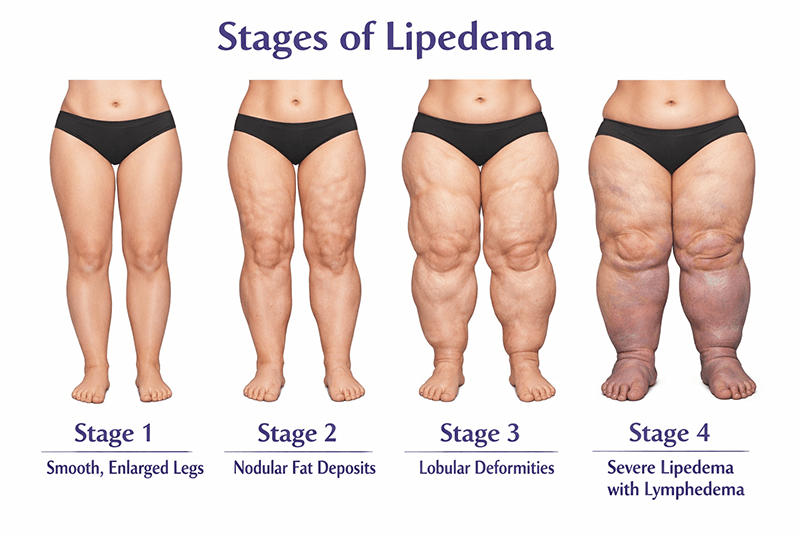
Lipedema is a chronic fat disorder characterized by the abnormal buildup of nodular fatty tissue, typically affecting the hips, thighs, calves, and sometimes the arms. The condition usually develops symmetrically and often spares the hands and feet, creating a distinct cuffing appearance at the ankles or wrists.
Unlike typical weight gain, lipedema fat is often resistant to traditional weight loss methods. Even in instances of fat loss through diet and exercise, lipedema fat deposits can persist and remain unaffected and symptomatic. The condition is progressive, meaning symptoms often worsen over time without proper management.
What Are the Symptoms and Causes of Lipedema?
Symptoms of lipedema can vary in severity but often include:
- Pain, tenderness, or sensitivity to pressure
- Easy bruising
- Swelling that increases throughout the day
- A heavy or aching feeling in the limbs
- Decreased mobility in later stages
The exact cause of lipedema is not fully understood. Current research suggests it may be related to hormonal influences, genetic factors, and abnormal fat cell development. Many patients notice symptoms beginning or worsening during periods of hormonal change, such as puberty, pregnancy, or menopause.
Contrary to belief, lipedema is not caused by obesity, although the two conditions can exist together.
Treating Lipedema in the Arms and Legs With Liposuction
Liposuction is currently the most effective surgical lipedema treatment options. Sometimes called lipedema surgery, lipedema liposuction differs greatly from cosmetic liposuction in both technique and goals. Rather than focusing solely on improving aesthetics, lipedema liposuction is performed to reduce pain, swelling, and functional limitations.
When Is Liposuction Recommended?
Liposuction may be recommended when:
- Conservative treatments such as compression therapy and manual lymphatic drainage no longer provide adequate relief
- Pain, swelling, or heaviness interferes with daily activities
- Lipedema continues to progress despite lifestyle modifications
Early intervention may help slow disease progression and improve long-term outcomes.
How Is Lipedema Surgery Performed?
Lipedema liposuction is performed using specialized, lymph-sparing techniques designed to minimize trauma to surrounding tissues. Common approaches include tumescent liposuction, power-assisted liposuction, or water-assisted liposuction.
Procedures are often performed in stages, treating specific areas over multiple sessions to support safer recovery and more controlled results.
Who Is a Good Candidate?
Ideal candidates for lipedema liposuction typically:
- Have a confirmed diagnosis of lipedema
- Are in good overall health
- Have realistic expectations about outcomes
- Are willing to commit to long-term management, including compression garment use
Liposuction does not cure lipedema, but it can significantly reduce symptoms and improve daily comfort for many patients.
What Results and Benefits Can Lipedema Liposuction Provide?
Patients who undergo lipedema surgery often report:
- Reduced pain and tenderness
- Decreased swelling
- Improved mobility and endurance
- Better limb contour and proportion
- Slower progression of lipedema-related changes
Are Lipedema Liposuction Results Permanent, or Can Lipedema Fat Return?
Fat cells removed during liposuction do not regenerate; they are permanently removed. Lipedema, however, is a chronic condition and remaining fat cells that are not removed via liposuction may still enlarge over time.
Following the procedure, most patients should follow a long-term maintenance strategy to preserver results. This may include:
- Maintaining a stable weight through healthy, low inflammatory diet
- Wearing compression garments as recommended
- Engaging in regular low-impact exercises
Is Lipedema Surgery Covered by Medical Insurance Plans?
Insurance coverage for lipedema liposuction varies by provider and plan. Some insurance companies may consider the procedure medically necessary (and thus coverable) if:
- Conservative therapies have been unsuccessful
- Lipedema symptoms significantly impair quality of life
- Medical documentation supports the diagnosis
If these standards are unmet the insurance plan will consider the procedure cosmetic, and typically will not cover the procedure.
Preauthorization is typically required, and coverage cannot be guaranteed. Many practices assist patients by providing medical documentation to support insurance submissions.
Recovery After Liposuction For Lipedema
Recovery after lipedema liposuction is very similar to traditional liposuction recovery. Most patients can expect temporary swelling, bruising, and soreness in the treated areas, which gradually improve over the first several days to weeks. Compression garments are typically worn to help control swelling, support healing tissues, and improve comfort during recovery.
Many patients can return to normal daily activities, including work that is not physically demanding, within about one week after surgery. Strenuous exercise and heavy lifting are usually limited for several weeks. By approximately six to eight weeks post-procedure, most swelling has largely resolved, and mobility has improved.
Final Thoughts
Lipedema is a complex and often overlooked condition, but effective treatment options are available. While liposuction is not a cure, it can provide lasting symptom relief and meaningful improvements in quality of life for appropriately selected patients.
If you suspect you may have lipedema or are struggling with painful, nodular lipedema fat that does not respond to traditional weight loss methods, a consultation with a qualified specialist can help determine whether liposuction or other therapies may be right for you.
Elizabeth Geddes-Bruce, MD is a board certified dermatologist and dermatologic surgeon specializing in the practice of both cosmetic and medical dermatology. Dr. Geddes-Bruce is fellowship-trained in cosmetic dermatology and laser surgery. She served as Chief Resident at one of the nation’s top dermatology programs – The University of Texas at Houston and M.D. Anderson Cancer Center.
Disclaimer: The contents of the Westlake Dermatology website, including text, graphics, and images, are for informational purposes only and are not intended to substitute for direct medical advice from your physician or other qualified professional.