
Perioral Dermatitis: Hidden Triggers in Your Routine

Patients who experience perioral dermatitis often become frustrated as it often seems to improve, then suddenly flares again. The rash seems to “almost clear,” only to return around the mouth, nose, or chin a few weeks later.
The biggest reason for perioral dermatitis recurrence is a hidden trigger in the patient’s normal daily routine. An unknown culprit, potentially a skin care product, topical medication, toothpaste, makeup product, or lip balm, that re-ignites symptoms. In some cases, the products used to “fix” the irritation may actually keep the cycle going.
Understanding potential hidden triggers and doing a routine audit to cut out any potential instigators is the key to finally getting perioral dermatitis under control.
What Is Perioral Dermatitis?
Perioral dermatitis is an inflammatory rash that most often appears around the mouth. Periroral dermatitis can present as small red or skin-colored bumps, irritation, scaling, dryness, or a rash that burns or feels sensitive. Although the name means “around the mouth,” it is possible for the irritation to also appear around the nose or eyes, which is why some dermatologists use the term periorificial dermatitis.
Perioral dermatitis is commonly mistaken for acne, eczema, rosacea, or simple skin irritation. Misdiagnosis can be highly detrimental: acne treatments may be too harsh, thick moisturizers may be too occlusive, and steroid creams may temporarily reduce redness while setting up a rebound flare later.
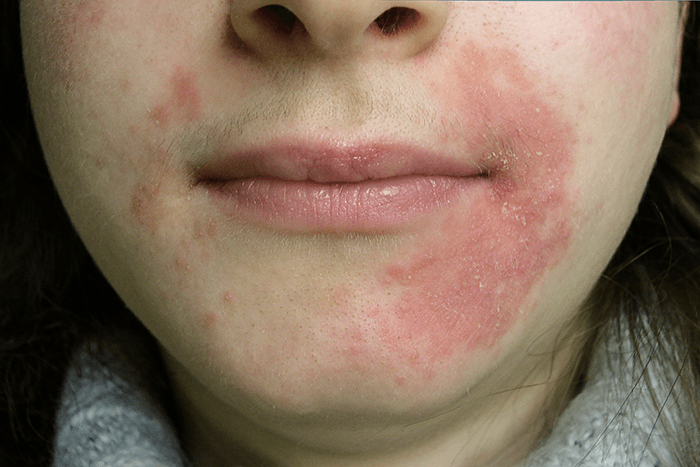
Why Perioral Dermatitis Keeps Coming Back
Perioral dermatitis often recurs as the skin is being repeatedly exposed to a trigger (similar to an psoriasis trigger or rosacea trigger). A patient may stop using one product for a few days, see improvement, and then restart the same routine that caused the flare in the first place.
Another common issue is over-treatment. Since perioral dermatitis can look like acne or irritation, patients may layer on more actives, more moisturizers, more spot treatments, or stronger products. Instead of calming the rash, this can further irritate the skin barrier and make the condition more persistent.
Topical steroids are one of the most important triggers to understand. Steroid creams may temporarily make redness look better, which can make patients think they are helping. However, perioral dermatitis tends to flare when steroids are continued, overused, or stopped after repeated use. This creates a cycle where the rash improves briefly, rebounds, and then prompts the patient to use the steroid again.
Perioral Dermatitis Triggers Hiding in Your Routine
Perioral dermatitis triggers are not always obvious. Many are products patients use every day without thinking of them as potential irritants.
Please Note: Patients should not stop using any prescribed medication without first speaking with the physician who prescribed said medication.
Common hidden triggers may include:
- Topical steroid creams: Over-the-counter hydrocortisone or prescription steroid creams can trigger or worsen perioral dermatitis, especially when used repeatedly on the face.
- Steroid inhalers or nasal sprays: Steroid exposure around the mouth or nose may contribute to flares in some patients, so rinsing the face or mouth after use may help reduce residue.
- Heavy creams or occlusive products: Thick moisturizers, ointments, balms, and heavy barrier creams can trap heat, moisture, and product residue around the mouth. For some patients, this occlusion may worsen bumps and irritation.
- Retinoids: Retinoids can be very effective for acne and anti-aging, but they can also be irritating. If the skin barrier is already inflamed, retinoids may make perioral dermatitis feel more dry, stingy, or reactive.
- Exfoliating acids: Chemical exfoliants like glycolic acid, salicylic acid, or lactic acid can worsen irritation when the skin is inflamed. Over-exfoliation is a common reason the rash becomes more persistent.
- Acne treatments like benzoyl peroxide: Benzoyl peroxide can be helpful for acne, but perioral dermatitis is not the same as acne. Using strong acne treatments on perioral dermatitis may lead to more burning, peeling, and inflammation.
- Fluoride toothpaste: Perioral dermatitis symptoms have been reported to flare with usage of certain fluoride toothpastes, especially if they have prolonged contact with the skin around the mouth.
- Lip balms and lip products: Lip balms, glosses, plumping products, flavored products, and long-wear lip color can migrate onto the surrounding skin. If the rash is concentrated around the mouth, lip products should be considered as a possible trigger.
- Makeup or sunscreen that irritates the area: Foundation, concealer, and sunscreen are not automatically bad, but some formulas may be too heavy or irritating for inflamed skin. Products that require aggressive removal can also worsen the cycle.
- Over-cleansing or scrubbing: Trying to “clean off” the rash can backfire. Harsh cleansers, washcloths, scrubs, and repeated washing may further damage the barrier and make the skin more reactive.
- Frequent product switching: Constantly changing routines makes it harder to identify triggers. It also exposes already irritated skin to more ingredients, preservatives, fragrances, and actives.
- Face masks, friction, or heat: Friction and trapped moisture around the mouth can contribute to irritation. This may be more noticeable with masks, scarves, heavy workouts, or hot environments.
- Hormonal shifts or stress: Hormones and stress may not be the only cause, but they can influence inflammation, skin sensitivity, and flare patterns. For some patients, perioral dermatitis becomes more noticeable during periods of hormonal change or increased stress.
How to Treat Current Perioral Dermatitis and Prevent Future Flares
Getting perioral dermatitis under control often requires a two-pronged process: treating the rash and identifying what is keeping it active (to prevent recurrence).
The first step is usually simplifying the routine by temporarily removing unnecessary products so the skin has a chance to calm down and the likely triggers can be identified.
During a flare, patients may benefit from:
- pausing harsh actives, including retinoids and exfoliating acids
- avoiding steroid creams unless specifically directed by a physician
- using a gentle, non-irritating cleanser
- keeping moisturizer simple and lightweight
- avoiding heavy balms or occlusive products around the mouth
- minimizing makeup over the affected area
- avoiding scrubbing, picking, or aggressive cleansing
- reviewing toothpaste, lip products, and sunscreen as possible triggers
Once the rash is improving, products should be reintroduced very slowly. Take your time when rebuilding your regimen, adding one product back at a time makes it easier to tell what the skin can tolerate and what may be causing flares.
Prevention is often less about finding one perfect product and more about avoiding the cycle of irritation. A consistent, simple routine is usually better than frequently switching products or chasing every new active ingredient.
When Prescription Treatment May Be Needed
Some cases of perioral dermatitis improve with trigger avoidance and a simplified routine. Others need prescription treatment.
A dermatologist may recommend topical prescription medications, such as anti-inflammatory or antibiotic-based treatments, depending on the severity and location of the rash. In more persistent or widespread cases, oral antibiotics may be used for a period of time to calm inflammation.
Prescription treatment can be especially helpful when perioral dermatitis keeps returning, spreads beyond the mouth area, causes significant discomfort, or does not improve after routine changes. The goal is not only to clear the current flare, but also to create a plan that reduces the chance of recurrence.
When Should You See A Dermatologist?
It is a good idea to see a dermatologist if the rash keeps coming back or if the diagnosis is unclear. Perioral dermatitis can resemble acne, eczema, rosacea, contact dermatitis, and other inflammatory skin conditions, so getting the right diagnosis matters.
Patients should also schedule an appointment if the rash is:
- spreading
- painful, burning, or worsening
- near the eyes
- associated with significant redness or swelling
- not improving with gentle skin care
- recurring after steroid use
- affecting daily comfort or confidence
A dermatologist can help identify triggers, rule out other conditions, and recommend a treatment plan that is appropriate for the patient’s skin type and symptoms.

Dr. Radhika Shah is a Board-Certified Dermatologist with expertise in medical, pediatric, surgical, and cosmetic dermatology, with a special focus on complex skin disease and its psychological impact. A native Texan, she completed her undergraduate, graduate, and medical training across respected Texas institutions, ultimately serving as Chief Resident during her dermatology residency at Baylor Scott & White. Dr. Shah is also an accomplished medical writer who has contributed textbook chapters and published research in leading dermatology journals. She is dedicated to delivering thorough, compassionate care and tailoring treatment plans to each patient’s unique needs. Dr. Shah is an active member of the American Academy of Dermatology and other professional societies.
Disclaimer: The contents of the Westlake Dermatology website, including text, graphics, and images, are for informational purposes only and are not intended to substitute for direct medical advice from your physician or other qualified professional.