

Ice Water Facials on TikTok: Do They Really Work?
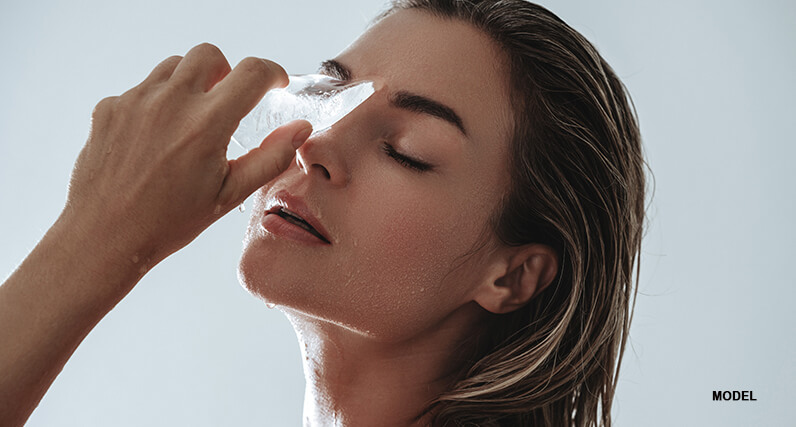
Scrolling through TikTok or Instagram, you have likely seen influencers plunging their faces into bowls of ice water or rubbing ice cubes directly on their skin. This ritual, often called an ice water facial or ice water dunking, is promoted as a quick, at-home way to tighten pores, reduce puffiness, calm inflammation, and create an instant glow.
While cold therapy does have legitimate medical and dermatologic uses, applying extreme cold to the face is not as harmless as it may appear online. Below, we break down what the ice water facial is, what benefits it may realistically provide, potential risks, and whether there are better alternatives for skin health.
What Is an Ice Water Facial?
An ice water facial generally involves exposing the skin to very cold temperatures for a short period of time. Common methods include:
- Ice Face Dunk: Submerging the face in a bowl of ice water for 10 to 30 seconds, sometimes repeated several times
- Rubbing ice cubes directly on the skin
- Using frozen rollers, spoons, or facial tools
The trend has gained popularity through short-form videos that show dramatic before-and-after results, often emphasizing reduced redness, tighter-looking pores, and a refreshed appearance. It is especially popular on TikTok, Instagram Reels, and beauty challenge content, where simplicity and shock value help trends spread quickly.
Claimed Benefits of Ice Water Facials
It’s easy to understand the appeal of the ice water facial. Online posts tout it as easy and inexpensive way to improve the skin. And people are drawn to the idea of a fast, natural solution that does not require injectables, devices, or professional treatments. But can the ice water facial really deliver on its promises?
Supporters of the trend claim it can instantly:
- Shrink pores
- Reduce facial puffiness, especially under the eyes
- Calm redness or irritation
- Improve circulation
- Give the skin a temporary “tight” or lifted look
Does the Ice Water Facial Actually Work?
What cold does to the skin
Exposing the skin to extreme cold causes vasoconstriction, meaning blood vessels temporarily narrow. This can lead to:
- Reduced redness
- Decreased swelling or puffiness
- A feeling of firmness or tightness
Cold can also temporarily dull nerve endings, which is why ice is often used to reduce pain or swelling after injuries.
Are the effects real?
Yes, an ice water facial can indeed provide temporary benefits. They keyword being temporary!
In the short run, and ice water facial may:
- Reduce puffiness for a few hours
- Make pores temporarily appear smaller due to skin tightening
- Calm flushed or irritated skin for a limited period
However, contrary to some claims made online, this trend will not:
- Permanently shrink pores
- Improve acne long term
- Increase collagen production
- Replace medical or professional treatments
Pores do not physically open and close. Cold exposure simply tightens the surrounding skin, which changes how pores look, not their actual size.
Can Ice Water Facials Be Harmful?
Ther may be some (limited) benefits to the ice facial trend. However, exposing the skin to repeated or intense cold can result in several unwanted and unanticipated side effects. The chances of such issues increases when ice is applied directly to the skin without protection.
Some potential risks of cold overexposure include:
- Skin irritation or redness
- Broken capillaries, particularly in people with sensitive skin
- Increased rosacea flares
- Numbness or discomfort
- Cold burns or frostbite with prolonged exposure
Individuals with the following conditions should be especially cautious:
Doing this occasionally for puffiness is generally low risk for healthy skin, but daily or aggressive use increases the likelihood of irritation and barrier damage. If your skin feels tight, dry, or inflamed afterward, that is a sign the treatment is too harsh.
Are There Better Alternatives?
For most people, there are safer and more effective ways to achieve the benefits people seek from ice water facials. The following options are scientifically tested to be safer and more effective than ice water facials:
For puffiness and swelling
- Cold eye masks or gel packs, used with a cloth barrier
- Caffeine-based eye creams
- Proper sleep and salt reduction
For redness and inflammation
- Products that contain niacinamide, azelaic acid, or centella asiatica
- Gentle moisturizers that support the skin barrier
For addressing pore appearance and skin texture
- Topical retinoids
- Chemical exfoliants like salicylic or glycolic acid, used appropriately
- Professional treatments, such as chemical peels
For achieving skin tightening and glow
- Microneedling
- Laser treatments
- Medical-grade skincare routines tailored to your skin type
Who Should and Should Not Try Ice Water Facials?
Ice water facials may be reasonable for:
- People with generally resilient skin
- Occasional use before an event to reduce puffiness
- Short exposure with a barrier, such as a cold compress rather than direct ice
They are not recommended for:
- Individuals with rosacea or chronic redness
- People with sensitive or compromised skin barriers
- Anyone experiencing stinging, burning, or prolonged redness afterward
As with many social media trends, what works briefly for one person may aggravate another’s skin.
Final Verdict
Ice water facials can temporarily reduce puffiness and redness, but their benefits are short-lived. Worse, when done aggressively or too often, they can irritate the skin and worsen chronic skin conditions like rosacea. For long-term skin health and aesthetic improvement, dermatologist-recommended products and professional treatments are safer, more predictable, and more effective.

Aarushi Walia is a board-certified Physician Assistant with advanced training in medical, surgical and cosmetic dermatology. She is skilled in a wide range of aesthetic treatments, including neurotoxins, dermal fillers, lasers, and chemical peels. Aarushi is particularly passionate about acne treatment, skin of color dermatology, and helping patients regain confidence through personalized, results-driven care. She is known for her clinical efficiency, patient-first mindset, and passion for education.
Disclaimer: The contents of the Westlake Dermatology website, including text, graphics, and images, are for informational purposes only and are not intended to substitute for direct medical advice from your physician or other qualified professional.