
Glutathione Skin Brightening: Does It Really Work?

Glutathione is gaining popularity as a skin lightening skin care ingredient, with social media posts and influencers promoting it as a way of achieving brighter, more even-looking skin. It is frequently promoted online for skin brightening and lightening, reducing hyperpigmentation, improving radiance, and supporting overall skin health. As with any trending skin care ingredient, the real question is can it actually deliver the promised results?
Unfortunately, the answer at this time is… maybe. Some research does show it has a skin brightening effect and may have potential for improving pigmentation. However, the evidence is still limited, results can vary, and current research suggests that any lightening effects are not permanent and may reverse after stopping use.
What Is Glutathione?
Glutathione is a naturally occurring antioxidant composed of three amino acids: cysteine, glutamic acid, and glycine. These aminos can work to help protect cells from oxidative stress.
Oxidative stress occurs when unstable molecules called free radicals damage cells, which can contribute to inflammation, aging, and changes in skin appearance over time. The quest for antioxidants to reverse such damage has made glutathione popular in products and supplements marketed for skin brightening, anti-aging, and overall skin health.
Topical vs. Oral vs. Injectable Glutathione
Glutathione can be found in several forms, including topical skin care products, oral supplements, and injectable or IV treatments. These should not all be viewed the same way, especially when the goal is skin brightening or improved skin tone.
Topical Glutathione
Glutathione is available for topical use in various products including brightening-focused creams and serums. Studies showing positive results have used concentrations of 0.5–2%. It may help support a brighter-looking complexion, especially when combined with other proven brightening ingredients.
Oral Glutathione
Oral glutathione supplements are often marketed for skin brightening and antioxidant support. Some research suggests oral glutathione at doses of 250–500 mg per day may offer mild pigment-related benefits, but results are not guaranteed, and questions remain around absorption, dosing, and consistency. A 2025 systematic review by Sarkar et al. in the International Journal of Dermatology found that while oral glutathione provides moderately efficacious skin-lightening outcomes, the benefits are not sustained after discontinuation and the overall body of evidence remains limited. This makes it difficult to treat oral glutathione as a reliable skin-lightening solution.
Injectable or IV Glutathione
Injectable or IV glutathione is sometimes promoted for cosmetic skin lightening, but this is not a form we currently recommend or support for skin care purposes. The only placebo-controlled study of IV glutathione for skin lightening failed to demonstrate a statistically significant benefit. Beyond the question of efficacy, the FDA has raised concerns about glutathione being used in compounded sterile injectable drugs, including potential risks related to impurities or contaminants. Glutathione is not present in any FDA-approved drug product, and these concerns relate specifically to compounded preparations. The FDA also received reports of adverse events in patients who received an injectable drug compounded with L-glutathione from a source with potentially high endotoxin levels.
For these reasons, patients should be extremely cautious of IV or injectable glutathione marketed for cosmetic brightening.
How Does Glutathione Work?
Glutathione may help brighten the skin by influencing how melanin is produced. Some research suggests it may reduce activity of tyrosinase, an enzyme involved in pigment formation, and shift melanin production away from darker pigment (eumelanin) toward lighter pigment (pheomelanin). This is why glutathione has attracted interest for concerns like:
- uneven skin tone
- dark spots
- melasma
- dullness
- post-inflammatory hyperpigmentation
- overall skin brightness
However, the Sarkar et al. systematic review noted that important questions remain about treatment duration, maintenance, and long-term outcomes. In other words, there is some science behind glutathione as a skin brightener, but the research is not yet strong enough to draw firm conclusions.
Does Glutahione Really Deliver As Promised?
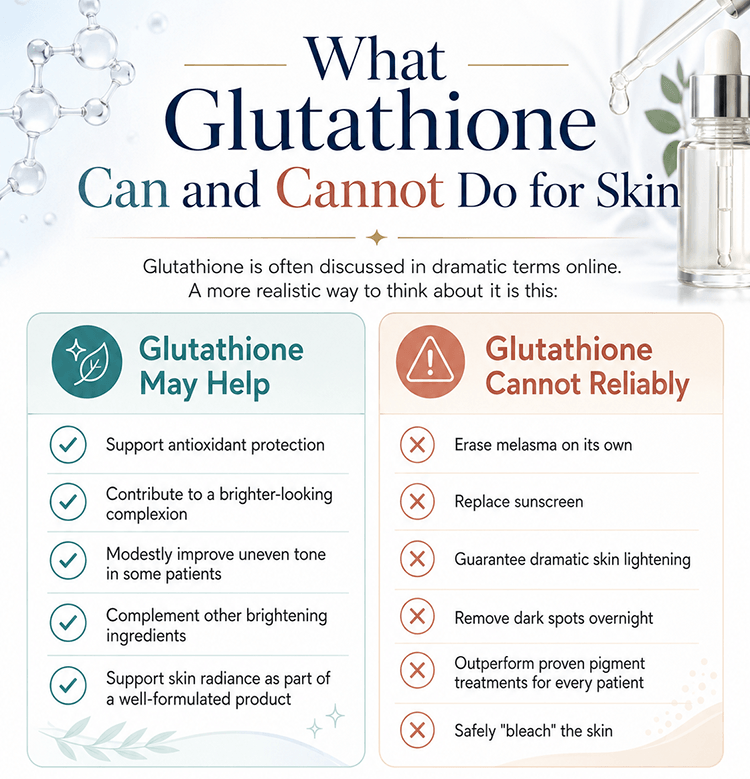
The most honest answer is that glutathione may help some patients, but results are typically modest, temporary, and not guaranteed.
One randomized, double-blind, placebo-controlled study (Wahab et al., International Journal of Dermatology, 2021) found that a combination of topical and oral glutathione was associated with significant improvements in pigmentation-related outcomes compared to placebo. But there are not enough large, high-quality studies to confidently say that glutathione works reliably, and the improvements seen in studies reversed after treatment was stopped. This is an important point: even when glutathione does help, the discoloration is likely to return once use is discontinued.
Patients with more severe forms of hyperpigmentation or melasma should be especially skeptical of glutathione social media posts promising complete improvement of discoloration. These conditions are often complex and usually require a more comprehensive treatment plan including daily sunscreen usage, trigger avoidance, and prescription medication or professional in-office treatments.
Is Glutathione Better Than Other Brightening Ingredients?
Glutathione may support brighter-looking skin, but it is usually not the first choice for stubborn discoloration. More established non-prescription ingredients like vitamin C, niacinamide, azelaic acid, retinoids, kojic acid, or tranexamic acid often offer better-supported results. Moderate to severe pigmentation will require more powerful options like prescription medication and in-office treatments like IPL or chemical peels.
In most cases, the best pigment plan is not built around one trending ingredient. It combines sun protection, consistent topical treatment, and guidance from your dermatology provider.
Who Would Benefit Most From Glutathione?
Patients seeking antioxidant support or those who exhibit less severe forms of discoloration could benefit from adding glutathione to their regimen. It may also be a good fit for anyone seeking a gentler ingredient to add to a routine focused on dullness or uneven tone.
However, patients with more severe forms of pigmentation or those who experience discoloration that is worsening, recurring, or not responding to over-the-counter products will probably require a more targeted plan from a trained dermatology provider.
Potential Side Effects and Safety Concerns
Glutathione is considered to be low-risk for topical use, with minor redness or irritation sometimes reported. Patients considering using a topical glutathione product should perform a patch test and introduce new products slowly and watch for redness, burning, itching, or worsening irritation.
Oral supplements can vary in quality, may have more substantial (though generally manageable) side effects, and may not be appropriate for every patient. Anyone who is pregnant, breastfeeding, taking medications, or managing a medical condition should speak with their doctor before taking glutathione orally through a supplement.
If irritation or unexpected side effects occur after starting a glutathione product, stop using it and speak with your dermatology provider.
How to Add Glutathione to Your Skin Care Routine
Interested in giving glutathione a try? A topical product is usually the most reasonable place to start. Look for a well-formulated serum or cream that combines glutathione with other supportive ingredients rather than relying on glutathione alone. When evaluating products, keep in mind that studies showing positive results used concentrations of 0.5–2% for topical formulations.
A simple glutathione-including routine may include:
- a gentle cleanser
- a topical antioxidant or brightening product
- a moisturizer suited to your skin type
- a daily broad-spectrum sunscreen
Proper sun care is vital; no brightening ingredient can work well if UV exposure continues to trigger new pigment. Many patients seeking to improve their uneven skin tone will actually benefit more from improving sunscreen consistency than adding the latest brightening serum.
The Final Word
Glutathione is an interesting antioxidant with potential skin-brightening benefits, but it is not a miracle ingredient. Topical and oral forms may offer modest improvement for some patients, especially when used as part of a broader brightening routine. However, the studies to date are small and limited, and the lightening effects observed have not been sustained after stopping treatment.
For most patients, especially those with moderate to severe pigmentation issues, glutathione should be viewed as a supporting ingredient, not a replacement for sunscreen, prescription medications, or professional in-office treatments from a dermatology provider.

Eden Warrick is a Board-Certified Physician Assistant specializing in both cosmetic and general dermatology. She attended Texas Tech University Health Science Center where she obtained her Master of Science in Physician Assistant Studies. Eden is board-certified by the National Commission on Certification of Physician Assistants and licensed by the Texas Medical Board. Her medical interests include pediatric dermatology, acne, eczema, rosacea, psoriasis, melasma, skin cancer prevention and treatment, as well as other dermatology conditions.
Disclaimer: The contents of the Westlake Dermatology website, including text, graphics, and images, are for informational purposes only and are not intended to substitute for direct medical advice from your physician or other qualified professional.