
Nose Botox (Nasaltox) for Tip Lift, Nostril Flare and More
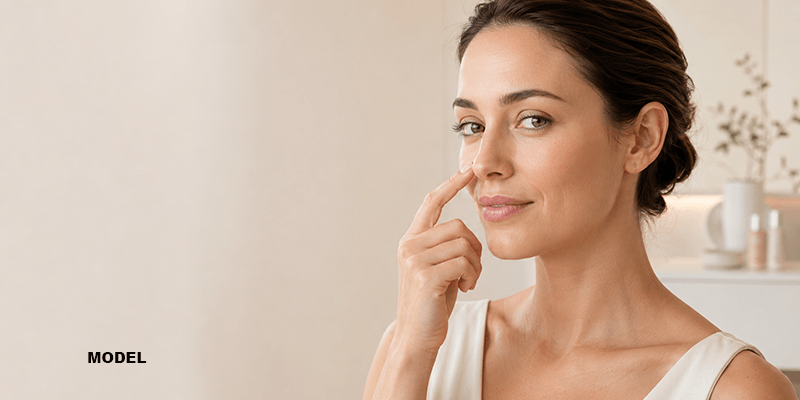
While many patients think of Botox for treating “bunny lines” (the diagonal wrinkles that appear along the sides of the nose when smiling, laughing, or squinting), few are aware of the many other benefits that Botox can have on the aesthetics of the nose.
Nose Botox, sometimes called “Nasaltox” or “nose tox”, is a great treatment non-surgical treatment option for patients whose nasal tip pulls downward when they smile or whose nostrils flare noticeably with facial expression. By temporarily relaxing the small muscles responsible for these movements, Nasaltox treatments can create a subtle tip lift or make the nose appear slightly narrower.
What Is Nose Botox (Nasaltox)?
Nasaltox use Botox Cosmetic (or another neurotoxin like Dysport or Xeomin, to temporarily strategic nasal muscles whose contractions that cause unwanted aesthetic factors. Neurotoxins work by temporarily reducing communication between targeted nerves and muscles. As the treated muscle relaxes, the movement it creates becomes less pronounced.
Please note that these nasal applications are considered off-label uses of Botox Cosmetic. Although off-label treatments are common in aesthetic medicine, achieving safe, natural-looking results requires an injector with advanced skill and experience.
Botox for Bunny Lines
Bunny lines are the diagonal or vertical wrinkles that form along the upper sides of the nose, usually while smiling, laughing, or squinting. They are often caused by repeated contraction of muscles around the nasal bridge and sidewalls.
Like crow’s feet or forehead lines, bunny lines typically begin as dynamic wrinkles, meaning they appear only with expression. Over time, repeated folding of the skin and age-related collagen loss can make them visible even when the face is relaxed.
Botox can soften bunny lines by temporarily reducing the muscle activity that repeatedly creases the skin. Once that movement is reduced, the lines usually become less visible during facial expression.
Botox for a Drooping Nasal Tip
The nasal tip naturally moves when a person smiles or speaks. In some patients, a small muscle called the depressor septi nasi pulls the tip noticeably downward during expression. This can make the nose look longer or more hooked when smiling, even if the tip looks adequately lifted when the face is at rest.
Once injected, Botox relaxes the downward pull of the depressor septi nasi muscle, allowing the nasal tip to remain in a slightly higher position during facial movement. Botox provides a naturally raised nasal tip, especially noticeable when smiling.
Botox for Nostril Flaring
Nostril flaring occurs when muscles around the nasal openings contract and pull the nostrils outward. Some degree of movement is completely normal, particularly during exercise, deep breathing, laughing, or strong facial expression. For some patients, however, the nostrils widen prominently while smiling or talking. This can make the base of the nose look broader than it does at rest.
Small amounts of Botox may be used to relax the muscles that contribute to excessive flaring. By limiting outward movement, treatment may make the nostrils appear less wide during expression.
While some describe the result as a slightly narrower-looking nose, Botox, does not actually reduce the actual size of the nostrils or change the width of the nasal bones. It simply reduces the movement that makes the nose temporarily appear wider.
What Nose Botox Cannot Do
Nose Botox is safe and effective for addressing some movement-related concerns. However, it does have clear limitations compared to other treatment options:
Nasaltox cannot:
- Alter the size of the nose (either shrink or add volume)
- Straighten a crooked nose
- Remove a bump from the nasal bridge
- Reshape a thick or bulbous nasal tip
- Correct a deviated septum or address breathing problems
- Provide permanent results
The simplest way to understand the treatment is this: Nose Botox can change movement, but it cannot change structure.
Patients who experience unwanted nasal cosmetic issues while the face is at rest (when not moving) or those seeking a dramatic or structural change may be better suited for liquid rhinoplasty or rhinoplasty surgery.
Nose Botox vs. Liquid Rhinoplasty
Liquid rhinoplasty uses dermal filler to add volume and strategically alter the contours of the nose. It may be used to camouflage a small bridge bump, improve symmetry, add bridge height, or create the appearance of a more supported nasal tip.
Since nose Botox does not add volume, it cannot correct concerns that require additional structural support or contouring.
Nose Botox vs. Rhinoplasty
Patients should know that nosetox will never create the same degree of lift that can be achieved through surgery (which alters structural support). It also does not reshape the nose or rotate cartilage.
Rhinoplasty (cosmetic nose surgery) remains the most comprehensive option for patients who want to change the actual structure of the nose.
Patients seeking to correct the following issues may require rhinoplasty:
- A prominent dorsal hump
- A crooked or asymmetrical nose
- Wide nasal bones
- A large or bulbous tip
- Significant tip drooping at rest
- Nostril size that is structural rather than movement-related
- A deviated septum or breathing difficulty
- A desire for permanent change
How Is Nose Botox Performed?
Nose Botox begins with an evaluation of the nose both at rest and in motion. The provider may ask the patient to smile, laugh, wrinkle the nose, flare the nostrils, or speak while observing how the nasal tip and sidewalls move. This dynamic assessment helps determine which muscles are contributing to the concern and whether Botox is likely to provide a meaningful improvement (as well as the amount of Botox needed for the desired result).
Treatment typically involves a small number of injections placed into targeted muscles. Treatments are quick (usually complete within 30 minutes) and most patients say any pain or discomfort is minor, likening it to a quick pinch or rubber band snap.
Since the treatment area is small, and the surrounding muscles heavily influence both the nose and upper lip functionality, precision is especially important. More Botox is not necessarily better, often a conservative approach will yield a noticeable result while preserving natural expression and normal function.
When Will Results Appear, and How Long Do They Last?
Botox results are never instant as it takes time for the neurotoxin to relax targeted muscles. Most patients will notice the onset of results a few days after injection, with the full result generally becoming visible within one to two weeks.
While results are not permanent, they are long-lasting. While Botox result duration can vary from patient to patient, most patients will enjoy results for 3-4 months.
As muscle activity gradually returns, bunny lines, tip movement, or nostril flaring will become more noticeable again. However, periodic “maintenance” treatments can be performed to extend results.
Is There Any Downtime?
Nose Botox requires little to no downtime and most patients can return to normal daily activities immediately after treatment.
Patients should follow their provider’s post-treatment instructions, which may include temporarily avoiding rubbing or pressing on the treated area and postponing strenuous exercise for a short period following injection.
Are There Risks?
Patients may notice mild bruising, redness, or swelling around the injection site immediately following the procedure; all of which are normal and will resolve on their own without intervention.
Since the muscles surrounding the nose are small and closely connected to the upper lip and smile, precise placement and conservative dosing are important. If Botox affects an unintended muscle, temporary side effects may include mild asymmetry, changes in the smile, upper-lip weakness, or reduced nostril movement. Unfortunately, Botox cannot be immediately reversed, but any unwanted muscle relaxation is temporary and gradually resolves as the treatment wears off.
Some patients may also experience less improvement than expected, the result of under-dosing or incorrectly addressing the wrong nasal muscles.
Choosing an experienced injector helps minimize these risks and guarantees that you will get the best results possible!

Haneen Issa, PA-C is a board-certified Physician Assistant specializing in both medical and cosmetic dermatology, known for her advanced clinical skill and warm, patient-centered approach. A Houston native, she graduated with honors from Houston Baptist University before completing her Physician Assistant training at Keiser University in South Florida, where she finished at the top of her class and served as Vice President of her cohort. She is an SDPA Diplomate Fellow and an active member of the Society of Dermatology Physician Assistants, continually advancing her expertise through national and international training in aesthetics, dermatology, and regenerative medicine. Haneen offers a comprehensive range of procedures, including neuromodulators, dermal fillers, biostimulatory injectables, PRP, exosome therapy, microneedling, resurfacing lasers, IPL, and body contouring treatments such as Aveli for cellulite. Her extensive hands-on training with world-renowned experts allows her to deliver highly customized, natural-looking outcomes tailored to each patient’s goals. Known for her holistic perspective, she integrates regenerative medicine and wellness strategies to help patients achieve healthier, more radiant skin at every age.
Disclaimer: The contents of the Westlake Dermatology website, including text, graphics, and images, are for informational purposes only and are not intended to substitute for direct medical advice from your physician or other qualified professional.