
Flying And Your Skin: Pre, In-Flight, and Post Skincare Tips

Ever stepped off a plane with the feeling of tight skin, chapped or overly dry lips, or a complexion that looks a little puffy or tired? The symptoms, sometimes called “flight face”, can make an appearance after a long travel day, even when your skin felt comfortable before boarding.
Dry cabin air, travel stress, and changes to your usual routine can all play a role. Intricate in-flight skincare regiments are hot on social medica, but many wonder is all that effort really necessary?
Fortunately, a few thoughtful adjustments can help keep your skin comfortable before, during, and after your flight. The goal of this post is to provide easy tips for comfortable feeling, beautiful skin without the need to pack an entire bathroom cabinet.
How Flying Affects Your Skin
Dry cabin air can leave skin feeling tight
Aircraft cabins typically have really low humidity levels of around 10–20%, according to the CDC. That’s extremely dry compared to normal indoor humidity, which typically stays within the 30% to 60% range. In this extremely dry environment, our skin can rapidly lose moisture and feel rough or tight. Even worse, dryness and dehydration may also make fine lines temporarily more noticeable.
Prolonged exposure to dry cabin air can really impact the skin barrier, the protective outer layer of skin, helps it retain moisture. When skin is already dry or irritated, a long stretch in low humidity can make it more uncomfortable. People with eczema or naturally dry skin may notice this especially readily.
Various factors lead to puffiness
Puffiness can be another unwelcome souvenir from a long travel day. Fluctuating air pressure during flight can influence fluid shifts, typically concentrated in the legs and facial tissue. The salty meals and snacks that many passengers eat during their flight can encourage fluid retention, while missed sleep may make swelling around the eyes more noticeable. Spending hours seated can also reduce circulation, diminishing the skin’s natural glow. Combined with the dryness of cabin air, these changes may leave you looking both puffy and less refreshed when you land.
Disrupted skincare routines cause flareups
The stresses of travel can worsen a variety of skincare issues including acne, redness induced by rosacea, and eczema flare-ups. Long travel days also disrupt proper skincare, leading many to skip applying product or spend longer than usual wearing makeup.
Potential for higher UV exposure
UV radiation is stronger at cruising altitude because there is less atmosphere to absorb it. Research has found approximately twice the melanoma incidence among pilots and cabin crew compared with the general population.
While that statistic is alarming, one thing to keep in mind is that passenger windows and cockpit windshields are different. Cancer Council Australia notes that passenger windows generally block UVA and UVB effectively. Still, The American Academy of Dermatology includes sun protection in its travel advice for cars and airplanes.
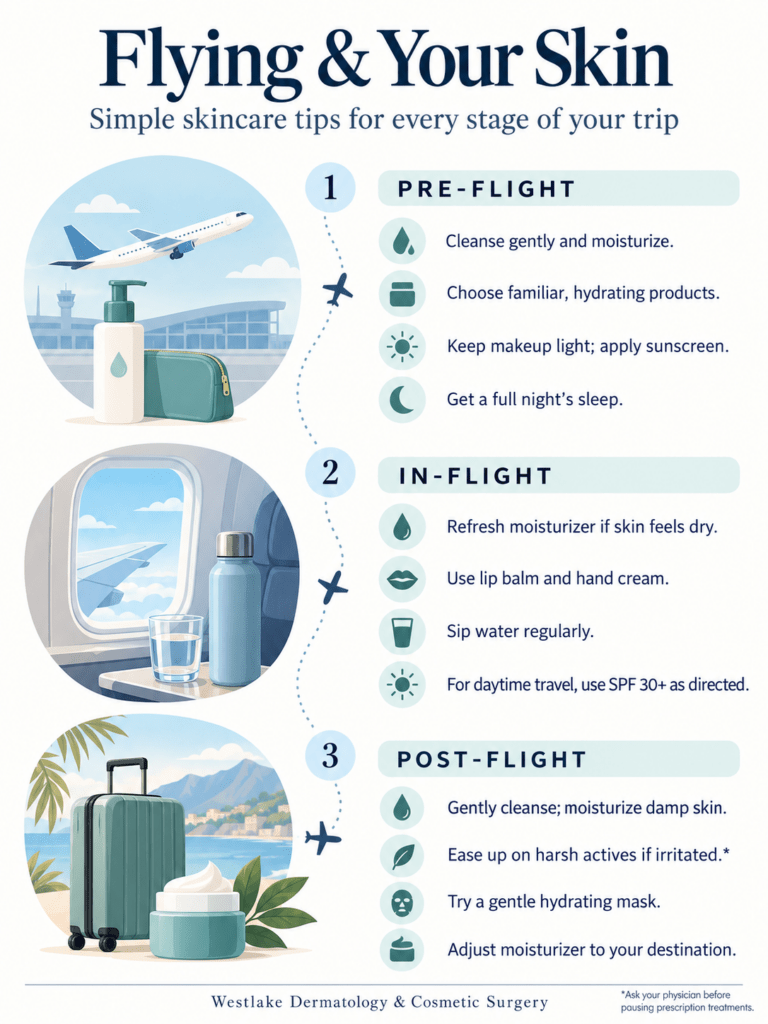
Pre-Flight Skincare Tips
Focus on skin barrier support
One of the best ways to prep your skin for a long day of travel is to focus on barrier support. Pre-flight (including a few days before your trip), focus on gentle skincare including gently cleansing and consistently moisturizing. It might also be wise to minimize the use of harsh actives a day or so before your flight.
Hydrate, Hydrate, Hydrate
Start your travel day fully hydrated, with well-moisturized skin. After cleansing, apply a moisturizer that suits your skin type to help retain moisture during the flight. Ingredients such as glycerin and hyaluronic acid help attract moisture, while ingredients such as dimethicone and petrolatum help limit moisture loss. For dry skin, a thick creamy product may provide more relief than a light lotion. Drink water regularly, too, but remember that drinking water does not replace the benefits of applying moisturizer.
Gently Exfoliate the Night Before
Gently exfoliate your skin the night before your trip. Use a familiar, mild product and follow with moisturizer. Avoid aggressive scrubs, strong peels, or trying a new exfoliant before traveling. If your skin is dry, irritated, or sensitive, skip this step. Your goal is to board with comfortable skin.
Use a Recovery Serum
A hydrating or barrier-supporting serum can provide an extra layer of care before your flight. Look for a familiar formula with ingredients such as hyaluronic acid, glycerin, or panthenol, and apply it beneath your moisturizer. Choose a product focused on hydration and comfort, and save stronger exfoliating or resurfacing serums for another day.
Get a Full Night’s Sleep
Aim for a full night of rest before departure whenever possible. Lack of sleep can make under-eye puffiness and a tired appearance more noticeable, especially during a long travel day. Packing ahead and completing your evening skin care routine early can help you avoid a last-minute rush that cuts into your sleep.
Fly With Little to No Makeup
Wearing minimal makeup lets the skin breath and makes it easier to refresh your moisturizer during a long flight (see our in-flight skincare tips below). If you prefer some coverage, choose lightweight, familiar products labeled as noncomedogenic to avoid clogging pores. Apply sunscreen as its own step before makeup rather than relying solely on the SPF in your foundation.
In-Flight Skincare Tips
Reapply moisturizer when your skin needs it
On a short flight, your pre-flight moisturizer may be enough. During a longer trip, apply a little more if your skin starts feeling dry. Clean your hands before touching your face, and choose a tube or pump if that makes application easier.
Keep the routine simple. Repeated cleansing and layers of unfamiliar products can create more opportunities for irritation. A facial mist or sheet mask is optional; neither is necessary to keep skin comfortable, and neither replaces moisturizer.
Protect your lips and hands
Apply a bland lip balm or a small amount of petroleum jelly as needed. If a balm stings or tingles, switch to one that feels comfortable. Keep hand cream nearby as well, especially if frequent handwashing leaves your hands dry.
Drink water throughout the flight
Water is your best choice for staying hydrated during a flight, so sip it regularly throughout your trip. Buy a large bottle of water after passing through security, or refill a reusable bottle before boarding, so you can sip throughout your flight without waiting for beverage service. Alcohol is one of the least helpful choices for hydration, as it can increase fluid loss and disrupt sleep. Consider skipping the in-flight cocktail and reaching for water instead.
Limit UV Exposure
During a long daytime flight, consider reapplying broad-spectrum SPF 30 or higher sunscreen, especially if you are seated beside a window. Clean your hands before applying it, and follow the product’s reapplication directions. Lowering the window shade when permitted is another simple precaution.
Post-Flight Skincare
Continue gently cleansing and moisturizing
Once you reach your destination, continue to utilize a gentle cleanser to remove makeup and sunscreen. Use lukewarm water, pat dry, and apply moisturizer while skin is still slightly damp. Avoid any sort of harsh scrubbing and overly hot water.
Give strong active ingredients a short break
For the first day or two after flying, consider focusing on hydration and limiting potentially irritating active ingredients, especially if your skin feels dry, tight, or sensitive. Retinol, exfoliating acids such as AHA or BHA, and at-home peels can add to irritation when skin is already uncomfortable. A gentle cleanser, a familiar moisturizer, and daytime sunscreen can help keep your routine simple while your skin recovers.
Let your skin’s condition guide when you resume stronger products. Taking a break from actives is not necessary for everyone or for every flight. Prescription treatments should also not be discontinued without permission from your physician.
Consider a hydrating mask
A hydrating treatment mask is a great choice to help calm and soothe the skin. Make sure to choose one focused on hydration (rather than exfoliation or anti-aging) and make sure to follow provided directions. Discontinue using the product if you feel any sort of burning or stinging sensation.
Adjust to your destination
Continue drinking water normally and allow time for rest. Your destination may call for small changes: dry or cold weather can make a richer moisturizer useful, while a warm, humid climate may feel more comfortable with a lighter formula. Keep using products that agree with your

Bernice Martinez is a licensed aesthetician, having received her education through classes at Texas Laser and Aesthetics Training Academy. She is a licensed laser technician and certified in skin resurfacing. Bernice specializes in laser and cosmetic procedures including laser hair removal, Vbeam, microdermabrasion, Clear+Brilliant, microneedling, dermaplanning and chemical peels.
Disclaimer: The contents of the Westlake Dermatology website, including text, graphics, and images, are for informational purposes only and are not intended to substitute for direct medical advice from your physician or other qualified professional.